The trades have a marketing problem. For decades, high schools funneled everyone toward four-year degrees while shop class got cut from the curriculum. The result? A massive skilled labor shortage and a generation of college graduates carrying $40K in student debt while licensed electricians and plumbers are earning six figures without a degree.
That's starting to change. Trade careers are having a genuine moment - not because they're trendy, but because the math finally got too obvious to ignore. When a journeyman welder in Texas is clearing $95K with overtime and a marketing graduate in the same city is making $42K, people start paying attention.
Here's an honest look at what working in the trades actually means in 2026 - the money, the work, the lifestyle, and how to get started at any age.
Why the Trades Are Booming in 2026
Three forces are creating the biggest demand for skilled tradespeople in modern history:
The retirement cliff. The average age of a skilled tradesperson in the US is 55. Roughly 40% of the current trades workforce will retire in the next decade. That's hundreds of thousands of positions opening up with not nearly enough new workers to fill them. In practical terms, this means if you get licensed in most trades right now, you'll have your pick of employers.
Infrastructure spending. The federal infrastructure law is pumping $1.2 trillion into roads, bridges, broadband, water systems, and power grids. That's not an abstract number - it translates directly into welding jobs, heavy equipment operator positions, electrical work, pipe fitting, and concrete finishing. These projects run 5-10 years, so the demand isn't a blip.
Clean energy transition. Solar installation, wind turbine maintenance, EV charging infrastructure, battery storage, and heat pump installation are creating entirely new specializations within existing trades. An electrician who can install solar panels and configure battery backup systems has more work than they can handle in most markets.
Housing demand. The US is short roughly 4 million homes. Builders can't find enough carpenters, roofers, HVAC techs, plumbers, or finish workers. This shortage keeps wages high and means good tradespeople can be selective about which projects they take.
Major Trade Categories
Electrical
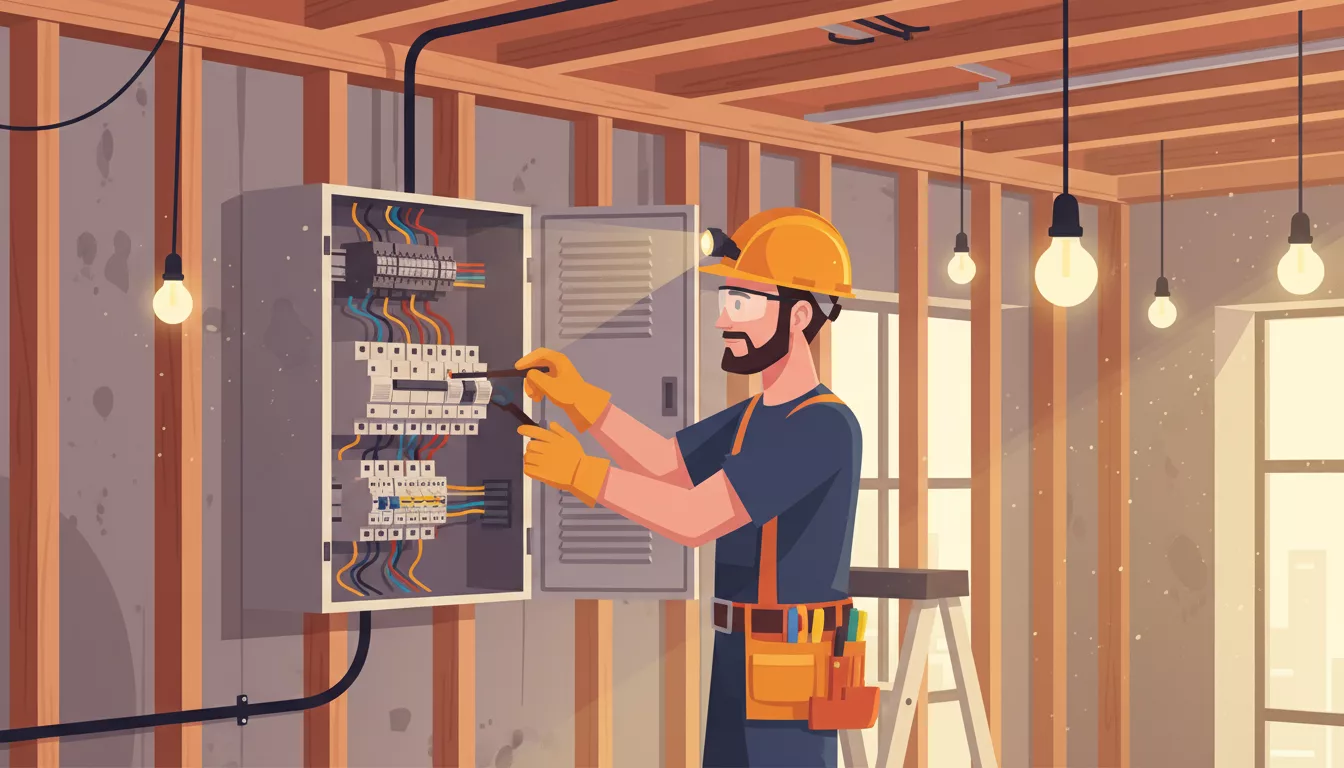
Electricians install, maintain, and repair electrical systems in homes, commercial buildings, and industrial facilities. Our guide to becoming an electrician covers the full path. It's consistently ranked among the best trade careers for good reason: the work is technical enough to stay interesting, the pay is strong, and every building needs electricity.
Specializations include residential wiring, commercial construction, industrial controls, solar/renewable energy, data center infrastructure, fire alarm systems, and low-voltage (networking, security, audio-visual). The solar and data center specialties are seeing the fastest growth and premium pay.
Plumbing
Plumbers install and repair water supply lines, drainage systems, gas lines, and fixtures. Our complete plumber career guide walks through the full path from apprentice to master. It's one of the highest-paying trades and arguably the most recession-proof - people need water and drainage regardless of economic conditions.
The common misconception is that plumbing is all clogged toilets and crawl spaces. New construction plumbing is actually precision work involving complex pipe systems, code compliance, and increasingly, high-tech fixtures and recirculation systems. Service plumbing (repairs) can be less glamorous, but it's also where the money is for self-employed plumbers - an emergency call on a Saturday night bills at premium rates.
HVAC (Heating, Ventilation & Air Conditioning)
HVAC technicians install and service heating and cooling systems. For a full breakdown of the career path, see our guide to becoming an HVAC technician. This trade has excellent job security because climate control isn't optional - when someone's AC dies in July or their furnace quits in January, they don't comparison-shop for a week. They call whoever can come fastest. If you're preparing for an HVAC role, our HVAC interview questions guide covers what service managers and contractors actually ask.
The field is evolving rapidly with heat pumps, smart thermostats, mini-split systems, and geothermal installations replacing older technology. Techs who stay current with new refrigerants (R-454B replacing R-410A) and heat pump technology are in particularly high demand. The EPA 608 certification is required, and additional manufacturer certifications (Carrier, Trane, Lennox) can boost your hourly rate.
Welding
Welders join metal parts using various processes (MIG, TIG, stick, flux-core). The range of welding careers is enormous - from structural steel on skyscrapers to pipe welding in refineries to underwater welding on oil platforms to precision aerospace welding in factories.
Welding has some of the highest earning potential in the trades, especially for specialized work. Our welding career guide covers the full path from training through certifications. Pipe welders on pipeline projects can earn $150K-$200K+ annually, and underwater welders can earn even more (though the work is dangerous and physically demanding). Even general welders in manufacturing typically earn $50K-$75K with steady hours. If you are preparing to interview, our welding interview guide covers the technical and safety questions you will face.
Carpentry & Construction
Carpenters build and repair structures using wood, steel studs, and other materials. The field ranges from rough framing (structural work) to finish carpentry (trim, cabinetry, custom woodwork) to specialized roles like formwork for concrete or scaffold building. See our carpenter career guide for a deep dive into this trade.
Finish carpentry and custom woodwork tend to pay more and attract people who enjoy craftsmanship. Rough framing is physically demanding but moves faster and can be a good way to build muscle and learn construction basics. Many carpenters eventually move into general contracting, running their own crews and managing entire construction projects. If you're preparing for a carpentry position, our carpentry interview questions guide covers what contractors ask at every level.
Heavy Equipment Operation
Operators run excavators, bulldozers, cranes, loaders, and other construction equipment. It's one of the fastest trades to enter - many operators are job-ready after a few months of training plus on-the-job learning.
Crane operators are at the top of the pay scale, especially tower crane operators on high-rise construction. The work can involve sitting in a cab for long hours, which is easier on the body than many other trades but can get monotonous. Operators who can run multiple types of equipment are more valuable and have more consistent work.
Automotive & Diesel Technology
Auto mechanics and diesel technicians diagnose and repair vehicles (see our auto mechanic salary guide and mechanic career guide for detailed pay data and training paths). The field is changing faster than almost any other trade because of the shift to electric vehicles, advanced driver-assistance systems, and increasingly computerized engines.
Diesel techs tend to earn more than auto mechanics because the equipment is more specialized (semi trucks - see our truck driver salary guide - construction equipment, agricultural machinery). But the EV transition is creating a new specialty - EV technicians who understand high-voltage battery systems, electric drivetrains, and the specialized safety protocols for working with 400-800V systems. This is a career within a career that's just getting started.
Salary Overview
| Trade | Apprentice/Entry | Journeyman (4-5 yrs) | Master/Foreman (10+ yrs) | Business Owner Potential |
|---|---|---|---|---|
| Electrician | $35K-$45K | $60K-$85K | $85K-$120K | $120K-$250K+ |
| Plumber | $32K-$42K | $58K-$80K | $80K-$115K | $130K-$300K+ |
| HVAC Technician | $33K-$42K | $55K-$75K | $75K-$100K | $100K-$200K+ |
| Welder | $35K-$45K | $50K-$75K | $70K-$100K | $90K-$200K+ |
| Pipe Welder/Fitter | $45K-$55K | $75K-$100K | $100K-$150K+ | $150K-$250K+ |
| Carpenter | $30K-$40K | $50K-$70K | $65K-$90K | $100K-$200K+ |
| Heavy Equipment Operator | $38K-$48K | $55K-$75K | $70K-$95K | Varies widely |
| Crane Operator | $45K-$55K | $70K-$90K | $90K-$130K+ | $150K+ (owner-operator) |
| Auto Mechanic | $30K-$38K | $45K-$60K | $60K-$80K | $80K-$150K+ |
| Diesel Technician | $38K-$48K | $55K-$70K | $70K-$95K | $100K-$180K+ |
| Elevator Mechanic | $50K-$60K | $80K-$100K | $100K-$130K+ | Rare (employer-based) |
| Ironworker | $40K-$50K | $60K-$85K | $80K-$110K | $120K-$200K+ |
Note: These are national averages. Union rates and high-cost-of-living areas (NYC, SF, Chicago) can push journeyman pay 20-40% higher. Overtime, which is common in construction, adds significantly. And once you have an offer in hand, knowing how to negotiate your starting salary can add thousands to your first-year earnings.
How Training Works
The trades don't work like other careers. You don't go to school for four years and then start working. You learn by doing, from day one.
Apprenticeships
The standard path for most trades is a 4-5 year apprenticeship where you work full-time alongside experienced tradespeople while taking classroom instruction (usually one day per week or in evening blocks). You earn money from day one - typically 40-50% of journeyman rate, increasing each year. By year four, most apprentices earn 85-90% of full journeyman pay.
Union apprenticeships (through IBEW, UA, JATC, etc.) are the gold standard. They're competitive to get into, but they provide structured training, benefits from day one, and a guaranteed path to journeyman status. Non-union apprenticeships through contractor associations (ABC, IEC) are another option, often easier to enter but with less structure and fewer guarantees.
Trade Schools
Vocational and technical schools offer 6-month to 2-year programs that teach fundamentals before you enter the workforce. They're a good option if you want a head start on the theory before applying for apprenticeships. Some trade school graduates skip the first year of apprenticeship based on their classroom hours.
Cost varies widely - community college trade programs might run $3K-$8K total, while private trade schools can charge $15K-$30K. Be cautious of expensive private trade schools making big promises. A community college welding program for $5K will teach you the same skills as a private school charging $25K. (If you're exploring your options without a degree, see how to get a job with no experience.)
Certifications & Licenses
Most trades require state or local licenses to work independently. The typical progression:
Apprentice ? Journeyman License (pass exam after completing apprenticeship hours) ? Master License (additional experience + harder exam, required in some states to run your own business or pull permits)
Specialized certifications add value: EPA 608 for HVAC, AWS certifications for welding, OSHA 30 for construction safety, CDL for operating certain heavy equipment on public roads.
The Physical Reality
This is the part that gets glossed over in "make $100K without college!" social media posts. Trade work is physically demanding, and you need to go in with open eyes.
Your body is your tool. Most trades involve standing, kneeling, climbing, lifting, and working in awkward positions for 8-10 hours a day. Knee problems, back issues, and shoulder injuries are common in long-term tradespeople. Taking care of your body - stretching, using proper lifting technique, wearing knee pads, and staying fit - isn't optional if you want a 30-year career.
Weather and conditions vary. Construction trades mean working outside in heat, cold, rain, and wind. Some specialties (like elevator mechanics or industrial maintenance) work mostly indoors. HVAC service techs might crawl through an attic in August - and yes, it's exactly as miserable as it sounds.
Safety is serious business. Falls, electrical shock, burns, and equipment injuries are real risks. Good employers invest heavily in safety training and equipment. Stay away from companies that cut safety corners to save money - no paycheck is worth a preventable injury.
The work changes as you advance. A 25-year-old apprentice doing physical labor all day is different from a 45-year-old foreman who's managing a crew and spending more time planning and coordinating. Many tradespeople intentionally move toward supervisory, estimating, inspection, or business ownership roles as they get older, which reduces the physical toll.
Union vs. Non-Union
This is one of the biggest decisions in a trade career, and both sides have legitimate arguments:
Union advantages: Higher wages (typically 15-25% more than non-union in the same area), employer-funded pension, better health insurance, structured apprenticeship, safety standards, and collective bargaining power. Union journeymen in major cities can earn $45-$65/hour on the check, plus benefits worth another $20-$30/hour.
Union trade-offs: Less flexibility (you work where the hall sends you), potential for layoffs between projects, dues (typically 2-4% of gross pay), and sometimes slower career advancement. In some regions, union work is feast-or-famine depending on project availability.
Non-union advantages: More control over where you work, often easier to start your own business, no dues, sometimes faster advancement based on individual performance.
Non-union trade-offs: Lower average pay, benefits may be weaker or non-existent, less structured training, and no collective voice when employers try to cut corners.
The "right" answer depends on your local market. In some cities (New York, Chicago, Boston), union work dominates construction and the pay premium is substantial. In others (much of the Southeast and Southwest), non-union work is more common and the gap is smaller.
The Path to Owning Your Business
One of the most compelling things about the trades is the clear path to business ownership. You don't need an MBA or venture capital. You need a license, a truck, some tools, and customers.
The typical timeline: work as a journeyman for 3-5 years to build skills and reputation, get your master license (where required), start taking side jobs, then eventually go full-time with your own business. Many successful trade business owners started with literally one truck and a cell phone.
The income ceiling for business owners is dramatically higher than for employees. A plumber working for a company might top out at $85K. A plumber running a 5-person shop can net $200K-$300K. Some tradespeople start with side work before going full-time. The trade-off is that you're now running a business - which means marketing, billing, managing employees, handling complaints, and dealing with insurance and taxes.
The tradespeople who struggle as business owners are usually great at the technical work but bad at (or uninterested in) the business side. If you want to go this route, learn basic bookkeeping, take a small business course, and consider partnering with someone who complements your weaknesses.
Breaking In at Any Age
Straight out of high school (17-19): Best time to start an apprenticeship. You'll be earning money while your classmates are taking on student debt. Look into pre-apprenticeship programs at your local community college or vocational center, or contact your local union hall directly.
Early 20s with some college or work experience: Still an ideal time. Many apprenticeship programs accept applicants up to their late 20s without any issues. Your maturity and work ethic will likely set you apart from younger applicants.
Career changers (30s-40s): Absolutely possible (our career change at 40+ guide has advice for mid-career switches) but be realistic about two things: the physical demands and the apprentice pay. Starting at $18-$22/hour in your 30s when you have a mortgage and kids requires financial planning. (If schedule flexibility matters to you, check out our list of best jobs for working parents.) Some programs offer accelerated timelines for people with related experience. If you're handy and have been doing your own home repairs for years, you may progress faster than a true beginner.
Military veterans: The trades are one of the best career transitions for veterans. Many military MOS specialties (combat engineer, electrician's mate, hull technician) map directly to civilian trade certifications. The GI Bill covers many apprenticeship programs, paying you a housing allowance on top of your apprentice wage. Helmets to Hardhats is a program specifically connecting veterans with trade apprenticeships.
Emerging Specializations
If you're thinking long-term, these are the trade specialties with the fastest-growing demand:
Solar installation and battery storage: Growing 25%+ annually. Electricians and HVAC techs who add solar certification can command premium rates.
EV charging infrastructure: Every parking lot, apartment complex, and commercial building needs charging stations. This specialty barely existed five years ago.
Data center construction and maintenance: AI and cloud computing are driving massive data center construction. These facilities need electricians, HVAC techs, plumbers, and fire suppression specialists - all at premium rates because of the critical nature of the work.
Smart home and building automation: While most trades require on-site presence (unlike work-from-home jobs), low-voltage electricians who can configure smart home systems, network infrastructure, and building management systems occupy a growing niche between traditional electrical work and IT.
Water treatment and wastewater: Aging infrastructure and tightening environmental regulations mean growing demand for operators and pipe fitters who specialize in water systems.
5 Things Nobody Tells You About Trade Careers
1. The first two years are the hardest. You'll be the person carrying materials, digging trenches, cleaning up job sites, and doing the work nobody else wants to do. This is normal and expected - it's how you prove your work ethic and learn the basics. Everyone above you went through it too.
2. Job security isn't automatic. Construction is cyclical. When the economy dips, projects get delayed or canceled. Having multiple skills (an electrician who can also do low-voltage or solar work), staying with a reputable employer, or being in a union with a strong hall all help smooth out the boom-bust cycle.
3. The stigma is mostly gone - but not entirely. Some people still look down on trade careers, despite the fact that many tradespeople out-earn them. You'll occasionally hear "why didn't you go to college?" from people who don't understand the economics. Let your paycheck and zero student debt do the talking.
4. Continuing education never stops. Codes change, technology evolves, and new materials come to market constantly. The NEC (National Electrical Code) updates every three years. HVAC refrigerants are transitioning. Building materials evolve. The best tradespeople are always learning.
5. Moving from the tools to management is a career itself. Becoming a foreman, superintendent, project manager, or estimator is how many tradespeople extend their careers past the physical prime. These roles pay well and use your trade knowledge in a less physically demanding way. But they require a different skill set - project management, communication, conflict resolution, budgeting. Start developing these skills early even while you're still on the tools.
Getting Started
If you're seriously considering a trade career, here's what to do this week:
Research your local market. Which trades are in highest demand in your area? Start putting together a resume even if you have no formal experience yet. What do journeymen earn? Are there strong unions? Check your state's Bureau of Labor Statistics data and search job postings to see who's hiring and at what rates (our job search strategies guide has tips that apply here too). (Looking for entry-level positions specifically? We have a full list.)
Visit a job site or shop. Nothing replaces seeing the work in person. When you're ready to start applying, our interview preparation guide will help (and yes, what you wear matters even for trade positions). Ask a contractor if you can shadow for a day. When you apply, a solid cover letter goes a long way. Most are happy to show someone interested - they're desperate for new talent.
Contact your local union halls. Even if you're not sure about going union, they're an excellent source of information about apprenticeship programs, training requirements, and what the work actually involves. Most have open application periods several times per year. Networking with people already in the trade is often the fastest way to hear about openings.
Check community college programs. Many offer evening and weekend trade courses that let you explore a trade before committing to a full apprenticeship. A 12-week introductory welding or electrical course can tell you a lot about whether the work suits you.
Look into pre-apprenticeship programs. Organizations like YouthBuild, Job Corps, and local workforce development boards offer free trade training programs, especially for people under 25 or career changers. These can fast-track your path into a formal apprenticeship. Building a strong LinkedIn profile also helps - many trade employers and union recruiters use it to find candidates.