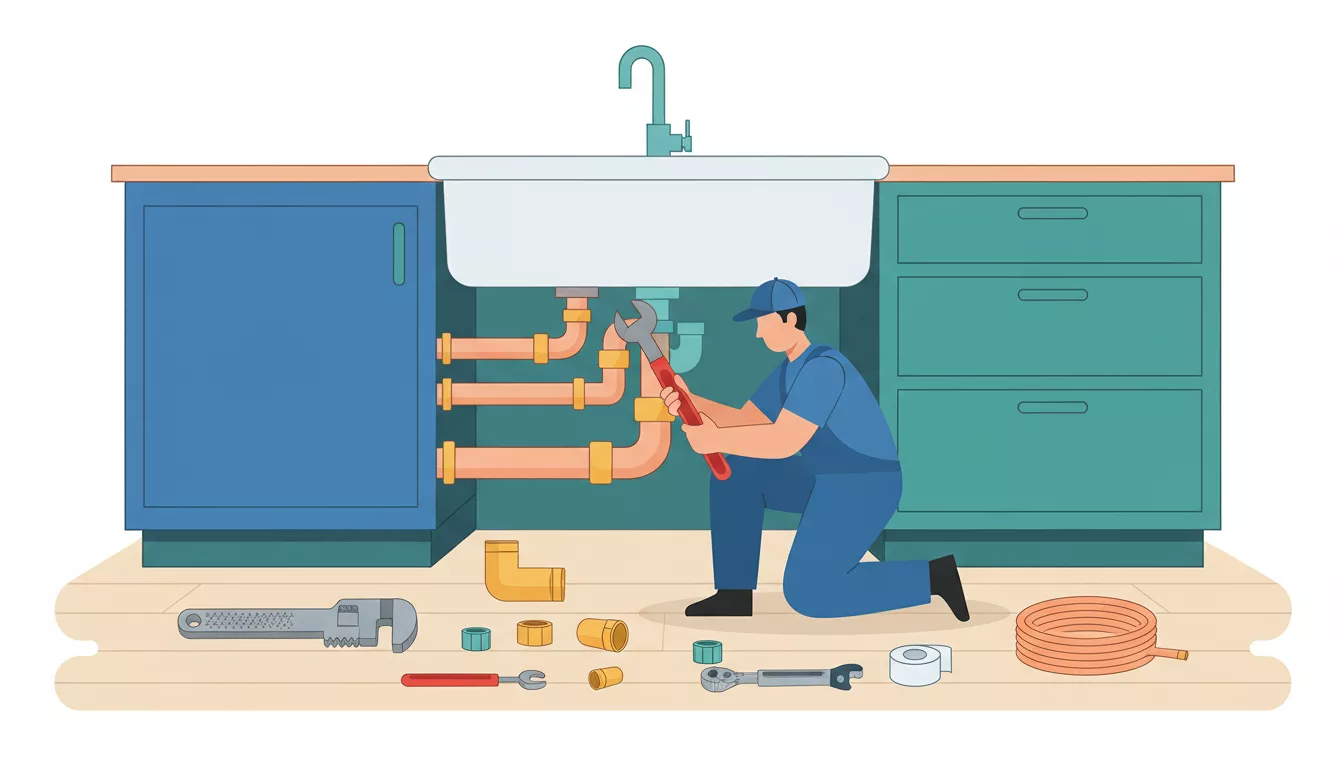
An Honest Look at the Plumbing Career Path
Everyone says "go into the trades" like it's one simple decision. It's not. But if you're seriously considering plumbing, you're looking at one of the most stable, well-paying skilled trades out there - with a barrier to entry that doesn't require a college degree or six figures of student debt. Plumbers earn $48,000 to $100,000+ depending on their license level, specialization, and location. Master plumbers who own their own service companies regularly clear well into six figures.
But here's the part people leave out. This career path takes 4-5 years of apprenticeship before you're a licensed journeyman. You'll spend time in crawl spaces, deal with sewage, work in weather that ranges from freezing to brutal, and take emergency calls at 2 AM on a Saturday. The work is physically demanding and sometimes genuinely unpleasant.
That said, the demand for plumbers is enormous right now and growing fast. The workforce is aging out, infrastructure is crumbling, and the work simply cannot be automated or outsourced. This guide covers the full path from zero experience to licensed plumber - what the training actually looks like, how licensing works, what you'll earn at every stage, and which specializations pay the most.
What Plumbers Actually Do (It's Not Just Fixing Toilets)
When most people think of plumbing, they picture a guy with a plunger. And yes, that happens. But the plumbing trade covers a massive range of work, and your daily experience will vary depending on which sector you're in.
Residential Plumbing
Installing and repairing water supply lines, drain systems, water heaters, faucets, toilets, and showers in homes. Residential work puts you face-to-face with homeowners, so customer service skills actually matter. You're troubleshooting why a shower has no hot water, replacing corroded galvanized pipes with PEX or copper, and sometimes doing complete repipes of older homes. The work is varied, and the scale is manageable.
Commercial Plumbing
Office buildings, hospitals, restaurants, schools. Commercial plumbing involves larger-diameter pipe, more complex systems, and strict code compliance. You'll work with cast iron, copper, PVC, and steel. The blueprints are more complex, you coordinate with other trades daily, and the systems include grease traps, backflow preventers, and commercial water heating that residential plumbers rarely touch. Pay is generally better than residential.
Service and Repair Plumbing
Service plumbers diagnose and fix problems - clogged drains, leaking pipes, failed water heaters, broken sewer lines. The work is different every call, which keeps things interesting but also means you need broad diagnostic skills. Modern service plumbing involves camera inspection equipment, hydro jetting for drain cleaning, and leak detection technology. Service plumbers often work on-call.
Industrial Plumbing
Manufacturing plants, power stations, water treatment facilities. Industrial plumbing involves specialized piping systems carrying everything from potable water to chemicals, steam, and compressed gases. The pipes are bigger, the pressures are higher, and the consequences of failure are more serious. The pay is among the highest in the trade.
New Construction
Roughing in plumbing systems for new buildings before walls and floors go in - running supply lines, installing drain-waste-vent (DWV) piping, setting fixtures, and passing code inspections. New construction is the best place to learn how complete plumbing systems work because you see everything from start to finish.
Specialty Areas
Gas fitting. Installing and servicing natural gas and propane piping. Gas work requires separate certification in most states because mistakes can cause explosions. It pays well and the liability is high.
Medical gas systems. Hospitals and surgical centers that use oxygen, nitrogen, and nitrous oxide need certified medical gas installers. This requires ASSE 6010, 6020, or 6030 certifications. Excellent pay, strict quality requirements.
Fire sprinkler systems. Designing and installing fire suppression systems. Fire sprinkler fitters often hold NICET certifications and work in a related but distinct sub-trade.
Backflow prevention. Installing and testing backflow prevention devices. Backflow testers need specific certification, and annual testing is required by most municipalities. Great add-on specialty with steady recurring work.
Do You Need a Degree? Education Requirements Explained
No. You do not need a college degree to become a plumber. But you do need some basics before anyone will hire you or accept you into an apprenticeship.
Minimum Requirements to Start
- High school diploma or GED - Required by virtually every program and employer.
- Basic math skills - Comfortable working knowledge of fractions, decimals, basic geometry, and simple algebra. Plumbers calculate pipe grades, fixture unit loads, and pipe sizes constantly. These are skills worth putting on your resume.
- Physical ability - On your feet 8-10 hours, lifting 50+ pounds regularly, working in crawl spaces and attics, digging trenches.
- Valid driver's license - You need to get to job sites. Clean driving record preferred.
- Clean drug test - Standard across the industry. Random testing on job sites too.
- Age 18+ - OSHA requirements for hazardous work environments.
Helpful But Not Required
Some people attend a pre-apprenticeship program at a community college (typically 3-12 months, $1,500-$8,000) to get a foundation in plumbing theory, pipefitting, and code fundamentals. These can make you more competitive for apprenticeship spots, especially with the UA (United Association). But they're not required. If you're wondering how to break into a career with no experience, the trades remain one of the most accessible paths.
Training Paths: How to Actually Learn Plumbing
There's no single "right way" to enter plumbing, but there are clearly better and worse paths. Here's how the main options compare:
| Feature | Trade School | Union Apprenticeship (UA) | Non-Union Apprenticeship | On-the-Job Training |
|---|---|---|---|---|
| Duration | 6-18 months | 5 years | 4 years | Varies widely |
| Cost to you | $5,000-$20,000 | $0 (books/tools only) | $0-$5,000 | $0 |
| Income during training | None (or part-time) | $18-$30/hour starting | $15-$22/hour starting | $13-$18/hour starting |
| Classroom hours | 200-600 | ~1,000-1,700 total | ~576-800 total | Minimal or none |
| On-the-job hours | Limited shop time | ~8,000-10,000 | ~8,000 | Varies |
| Benefits during training | None | Health insurance + pension | Depends on employer | Depends on employer |
| Competitiveness | Open enrollment usually | Very competitive | Moderate | Easiest to start |
| Best for | Getting foundations fast | Best overall training + career path | Strong training without union commitment | People already in construction |
Trade School / Community College
A plumbing program gives you a structured introduction to the trade - plumbing code (either the IPC or UPC depending on your state), basic pipe fitting in multiple materials, soldering copper, working with PEX, DWV system design, and blueprint reading. Programs range from 6-month certificates to 2-year degrees. Trade school is not a substitute for an apprenticeship - you still need supervised hours and eventual licensing - but it gives you a meaningful head start.
Union Apprenticeship (UA - United Association)
The United Association (UA) is the primary plumbing and pipefitting union. Local unions run Joint Apprenticeship and Training Committees (JATCs) that provide what most people in the trade consider the best available training.
UA apprenticeships are typically 5 years, combining on-the-job training with classroom instruction. You earn while you learn, starting at around 40-50% of the journeyman rate with raises every 6 months. Benefits - health insurance, pension contributions - usually start from day one.
The catch is getting in. Most locals take 25-50 apprentices out of several hundred applicants. You'll need to pass an aptitude test, interview well, and pass drug screening. If you don't get accepted on your first try, apply again. Many successful plumbers got in on their second or third application. Work as a plumber's helper in the meantime.
Non-Union Apprenticeship
Organizations like the Associated Builders and Contractors (ABC) and independent contractor groups run programs that are typically 4 years. These are generally easier to get into than UA apprenticeships, but your benefits, pay progression, and training quality depend on the specific contractor. Some are excellent. Some are mediocre. Talk to current and former apprentices before committing.
On-the-Job Training
Some plumbing companies will hire people with zero experience and train them. You start as a helper - carrying pipe, digging trenches, cleaning up. The advantage is earning immediately with no tuition. The disadvantage: your training might be narrow, and your progression depends entirely on your employer's investment in teaching you. If you go this route, study the plumbing code on your own and pursue your apprentice license as soon as your state allows.
Licensing: Apprentice, Journeyman, and Master Plumber
Plumbing is more heavily regulated than many other trades. In most states, you need a license to do plumbing work, and there's a clear progression: apprentice, journeyman, master.
Licensing Varies by State
There is no national plumbing license. Each state sets its own requirements, and the differences are significant.
| Licensing Level | States with Strong Requirements | States with Minimal Requirements |
|---|---|---|
| Statewide license required at all levels | Texas, California, Florida, Georgia, Oregon, Louisiana, Arizona, Massachusetts | - |
| Journeyman license required | Ohio, Michigan, Minnesota, Wisconsin, Utah, Tennessee, Alabama | - |
| Local licenses only / no state license | - | Pennsylvania, New York (NYC separate), Illinois (Chicago separate), Missouri, Kansas |
Check your specific state's plumbing board or licensing authority before you start.
Journeyman Plumber Exam
After completing your apprenticeship (4-5 years, 8,000-10,000 hours OJT plus classroom), you're eligible to sit for the journeyman exam. This is the license that lets you work independently. The exam typically covers:
- Plumbing code - The bulk of the exam. You need to know your state's adopted code (IPC or UPC) thoroughly. Most exams are open-book, but if you can't find answers fast, you'll run out of time.
- DWV system design - Pipe sizing, grade requirements, trap protection, venting methods
- Water supply systems - Pipe sizing, water pressure calculations, backflow prevention
- Gas piping - Sizing, materials, testing procedures (in states where plumbers do gas work)
- Safety - OSHA requirements, trenching safety, confined space procedures
Pass rates are around 60-70% on the first attempt. Study seriously for 2-3 months. Popular prep resources include Plumbing Exam Prep by R. Dodge Woodson and practice exams from IAPMO (UPC states) or ICC (IPC states). Exam fees are $100-$300, and most states require continuing education to maintain your license.
Master Plumber License
After 1-4 years as a journeyman (varies by state), you can sit for the master plumber exam. A master license lets you pull permits, start a contracting business, supervise other plumbers, and sign off on inspections. The exam is significantly harder - covering advanced system design, code interpretation, business law, and estimating. But this is the credential that opens the biggest doors in the trade.
Choosing a Specialization
Once you have your journeyman license, you can stay general or specialize. Specialization almost always means higher pay, but it also means narrowing your focus.
| Specialization | Average Salary Range | Demand Level | Work Environment | Additional Training |
|---|---|---|---|---|
| Residential Service | $48,000-$75,000 | Steady | Homes, generally comfortable | Minimal beyond license |
| Commercial Plumbing | $58,000-$90,000 | Strong | Office buildings, hospitals, schools | Backflow, medical gas helpful |
| Industrial/Process Piping | $65,000-$110,000 | Very strong | Plants, refineries - can be harsh | Welding certs, specialized materials |
| Gas Fitting | $55,000-$85,000 | Strong | Residential and commercial | Gas fitting certification required |
| Medical Gas Systems | $70,000-$105,000 | Growing | Hospitals, surgical centers | ASSE 6010/6020/6030 certifications |
| Fire Sprinkler/Suppression | $55,000-$85,000 | Steady | Commercial buildings | NICET certification, separate licensing |
| Backflow Prevention | $50,000-$80,000 | Steady (recurring) | All building types | Backflow tester certification |
| Steamfitting | $65,000-$100,000 | Moderate | Older buildings, industrial | Steam system training, welding |
Specializations Worth Watching
Medical gas installation is a niche with excellent pay and high barriers to entry, which means less competition. Every surgical center, dental office, and hospital needs properly installed medical gas systems. The ASSE certifications require dedicated training and testing, but once you have them, you're commanding premium rates.
Water treatment and filtration is growing as concerns about water quality increase. Plumbers who understand reverse osmosis, water softeners, and commercial filtration are in increasing demand.
Green/sustainable plumbing - rainwater harvesting, greywater recycling, high-efficiency fixtures. Building codes are increasingly requiring water conservation features, and plumbers who know these systems have an edge.
Salary Progression: What You'll Earn at Each Stage
Here's the money picture from start to finish. These are national averages - your actual numbers depend on location, union status, and specialization. For more detail, check our complete plumber salary guide.
| Career Stage | Years In | Annual Salary Range | Hourly Range |
|---|---|---|---|
| Plumber's Helper | 0 | $27,000-$35,000 | $13-$17 |
| 1st Year Apprentice | 1 | $32,000-$56,000 | $15-$28 |
| 3rd Year Apprentice | 3 | $42,000-$70,000 | $20-$35 |
| Journeyman Plumber (new) | 4-5 | $52,000-$80,000 | $25-$40 |
| Journeyman Plumber (experienced) | 8-10 | $62,000-$95,000 | $30-$46 |
| Foreman/Lead Plumber | 8-12 | $72,000-$105,000 | $35-$52 |
| Master Plumber (employed) | 8-12+ | $75,000-$115,000 | $36-$56 |
| Master Plumber (own business) | 10+ | $100,000-$250,000+ | Varies widely |
A few things stand out. First, you're earning from day one. No four years of paying tuition before you see a paycheck. By the time a college graduate starts their first salaried job, a plumbing apprentice has already earned $150,000-$250,000 with zero student debt.
Second, the ceiling for business owners is genuinely high. A master plumber running a service company with even a handful of trucks can clear $200K+ in a decent-sized market. And overtime matters too - service plumbers on-call regularly earn time-and-a-half for nights, weekends, and holidays. An experienced journeyman at $42/hour working consistent overtime can pull in $110,000+ a year. Learning to negotiate your pay early compounds your earning advantage throughout your career.
Geographic Salary Differences
Location matters enormously. The top-paying areas include:
- Illinois (Chicago area) - Union plumbers average $85,000+, scale can exceed $55/hour
- California - Average $78,000+, Bay Area and LA union rates among the highest nationally
- New York - Average $76,000+, NYC plumbers' union scale is exceptional
- Massachusetts - Average $74,000+, strong union presence drives wages up
- Oregon/Washington - Average $72,000+, especially strong in Portland and Seattle metros
The lowest-paying states (Mississippi, Arkansas, South Dakota) average $40,000-$48,000, but cost of living is dramatically lower. A journeyman making $45K in rural Arkansas may have more disposable income than one making $80K in San Francisco.
A Day in the Life: What to Really Expect
Here's a typical day for a service plumber working for a residential plumbing company. Not glamorous, but real.
6:30 AM - Arrive at the shop. Load your truck, check dispatch for your first call - a water heater replacement.
7:15 AM - First call. Homeowner says the water heater "just stopped working." You find a 15-year-old gas unit sitting in a puddle. Tank has rusted through. No repair possible - it needs replacement.
7:30 AM - Give the homeowner a price. They agree. You drain the old unit, disconnect gas and flue, wrestle 150 pounds of dead water heater up the basement stairs. Position the new one, solder the copper connections, connect the gas line, test for leaks with a gas sniffer, install the T&P relief valve, light the pilot, check for CO with your combustion analyzer.
10:00 AM - Collect payment, drive to the next call. Kitchen faucet replacement at a condo.
10:45 AM - Lie on your back in a space roughly the size of a coffin trying to reach supply connections under the sink. One supply nut hasn't moved since 2003. Basin wrench, PB Blaster, and some colorful language. New faucet goes in.
12:00 PM - Lunch in your truck in a parking lot. That's what service plumbers do.
12:30 PM - Emergency call from dispatch. Restaurant can't open - backed-up floor drain. You run a drain machine with a cutting head and pull out 20 feet of congealed grease. The smell is memorable.
2:00 PM - Running toilet. Twenty minutes - new flapper and fill valve. Not every call is a major project.
2:45 PM - Bathroom remodel rough-in. Relocate toilet drain, add shower valve, run new supply lines. You'll come back tomorrow to finish.
4:30 PM - Back to the shop. Restock truck, do paperwork. You're dirty, sore, and smell like you spent time under a restaurant.
5:00 PM - Done. Unless you're on call, in which case your phone might ring at 11 PM because someone's basement is flooding.
The Physical Reality (Be Honest With Yourself)
Plumbing is one of the more physically demanding trades. You need to go in with your eyes open.
Knees and back. Plumbers spend enormous time kneeling, crouching, and lying on their backs under sinks. Crawl spaces with 18 inches of clearance. Under-sink cabinets that weren't designed for adult humans. Most veteran plumbers have knee and back issues by their 40s. Good knee pads aren't a suggestion - they're a career investment. Learn proper lifting technique from day one.
Tight and unpleasant spaces. Crawl spaces with spiders, mud, and occasionally dead animals. Attics exceeding 130 degrees in summer. Pipe chases that barely fit your body. If you're severely claustrophobic, this is a real problem.
Weather. New construction sites don't have HVAC. Underground pipe work means digging in rain, cold, and heat. Even service plumbers work outside regularly - water mains and sewer lines don't care about the forecast.
Sewage and biohazards. This separates plumbing from other trades. You will deal with human waste. Backed-up sewer lines, clogged toilets, failed septic systems. Proper protective equipment is mandatory. You learn to handle it professionally, but it's not for everyone.
On-call demands. Pipes burst at midnight. Water heaters fail on Thanksgiving. The plumber who takes emergency calls earns premium rates but sacrifices personal time. If predictable hours matter a lot to you, this is a real trade-off.
How to Get Started: Your Step-by-Step Plan
Enough reading. Here's what to do.
Step 1: Honest Self-Assessment (This Week)
Can you handle the physical demands? Are you okay with tight spaces, sewage, and odd hours? If your algebra is shaky, spend 2-3 weeks on Khan Academy before applying anywhere. Plumbing math isn't hard, but you use it constantly.
Step 2: Research Local Options (Week 1-2)
- UA locals: Go to ua.org and find your local union. Call them or send a professional email asking when apprenticeship applications open.
- ABC chapters: Visit abc.org to find your regional chapter and connect with plumbing contractors.
- Community colleges: Look for plumbing technology certificates or pre-apprenticeship programs.
- Your state's plumbing board: Find out what licenses exist, what hours are required, and what code your state uses (IPC vs UPC).
Step 3: Get Exposure (Month 1-2)
If you've never worked in plumbing, get real-world exposure before committing years of your life. Apply as a plumber's helper ($13-$18/hour). It's grunt work, but you're seeing the trade firsthand and building relationships that lead to apprenticeship recommendations. Volunteer for Habitat for Humanity builds. If networking feels awkward, remember that trade workers are generally straightforward - ask honest questions and most journeymen are happy to talk.
Step 4: Apply for Apprenticeships (Month 2-3)
Apply broadly - UA, ABC, non-union programs, individual contractors. Have your transcripts, driver's license, Social Security card, and references ready. A clean resume format helps even for trade applications.
Step 5: Prepare for the Aptitude Test (If UA)
The UA aptitude test covers math and reading comprehension. Study fractions, decimals, basic algebra, and spatial reasoning. Practice under timed conditions. Don't underestimate the reading section.
Step 6: Build Your Foundation While You Wait
Buy a copy of your state's plumbing code and start getting familiar with the structure. Get comfortable with basic tools - pipe wrenches, channel locks, hacksaws, tape measures. Work on physical fitness, especially core strength, grip strength, and flexibility.
Career Advancement: Beyond the Wrench
Plumbing doesn't dead-end. There are clear advancement paths whether you want to stay hands-on, move into management, or build a business.
Master Plumber License. Lets you pull permits, start a business, and supervise others. In most markets, master plumbers earn 15-25% more than journeymen. Essentially required if you ever want to run your own shop.
Plumbing Inspector. Municipal inspectors review installations for code compliance. Pay is $55,000-$85,000 with predictable Monday-to-Friday hours and dramatically lower physical demands. Usually requires master license plus ICC certification.
Estimator / Project Manager. Large contractors need people who can price jobs and manage timelines. Mostly office-based, strong pay ($60,000-$100,000+), and your body isn't taking the daily beating of field work.
Teaching. Community colleges and trade schools need experienced plumbers to teach. Pay is $50,000-$75,000 with good benefits and predictable schedules. Union training directors can earn more.
Starting Your Own Business. Highest ceiling, highest risk. You'll need a master license, contractor's license, liability insurance ($2,000-$6,000/year), a work vehicle ($30,000-$60,000 outfitted), tools ($10,000-$25,000), and working capital ($15,000-$40,000). The path that works: start as a one-person residential service operation, build your Google reviews, grow your reputation, hire when you're consistently turning away work. Scale deliberately.
7 Mistakes That Delay Your Plumbing Career
- Only applying to one apprenticeship program. Apply to everything - UA, ABC, individual contractors. Your goal is to get started. Waiting months to reapply to a single program when you could be gaining hours elsewhere is time you never get back.
- Neglecting the math. If you can't calculate a 1/4-inch-per-foot pipe slope in your head, you'll fall behind. Spend two weeks on basic math review. It's free online.
- Treating helper work as beneath you. First-year apprentices carry pipe, dig trenches, and do whatever the journeyman needs. The ones who hustle and ask to learn get taught. The ones who complain get ignored. Your attitude in year one sets the tone.
- Not studying the plumbing code independently. The journeyman exam tests your ability to find answers fast in the code book. Start familiarizing yourself with your state's code early. People who only study code during class struggle on the exam.
- Staying with one employer doing one type of work. If you spend your entire apprenticeship doing only residential service, you won't have the well-rounded experience you need. Seek employers who expose you to new construction, commercial work, and different piping materials.
- Ignoring your body. Not wearing knee pads at 22 because your knees feel fine. Not wearing gloves when handling sewage because you're in a hurry. Take care of your body from day one - it's the only tool you can't replace.
- Waiting too long to get your master license. Some journeymen get comfortable and never pursue it. This limits your earning potential, prevents you from starting a business, and caps your advancement. As soon as you're eligible, start preparing.
Career Outlook: Why Now Is the Time
The Bureau of Labor Statistics projects 6% job growth for plumbers through 2032, but that headline number seriously undersells the opportunity.
The retirement wave is here. The median age of plumbers in the U.S. is in the mid-40s, and a large portion of the workforce is approaching retirement. The pipeline of new apprentices hasn't kept pace. This means more job openings, less competition, and stronger negotiating power. Plumbing consistently ranks among the best entry-level career paths for this reason.
Aging water infrastructure. Many cities are running on pipes installed 50-100 years ago. The American Society of Civil Engineers gives U.S. drinking water infrastructure a C-minus grade and wastewater a D-plus. An estimated 240,000 water main breaks happen per year. Fixing this is a multi-decade project requiring enormous numbers of plumbers.
Federal infrastructure spending. The Infrastructure Investment and Jobs Act committed billions to water and wastewater system upgrades. This money is flowing into projects now and will continue for years.
New construction demand. Housing shortages mean continued home building, and every home needs a complete plumbing system. Commercial construction adds even more demand. Plumbing is also one of the fastest-growing skilled trade paths in terms of job postings.
Can't be automated or outsourced. Nobody is sending a robot into your crawl space to fix a leaking drain. The pipe is here, the building is here, and the plumber has to be here. As someone who's looked at the broader trades and skilled labor market, plumbing stands out for its durability as a career choice.
Is This Career Right for You? An Honest Assessment
This career is a good fit if you:
- Like solving problems with your hands and figuring out how systems work
- Don't want to sit at a desk staring at a screen all day
- Can handle physically demanding work and aren't squeamish about messy conditions
- Want to earn while you learn instead of taking on student debt
- Like variety - different houses, different problems, different solutions
- Want a career where demand is high and unemployment is low
- Are detail-oriented - plumbing mistakes cause water damage, gas leaks, or health hazards
- Want a clear path to owning your own business - plumbing is one of the highest-paying careers without a college degree
This career might not be right if you:
- Have serious physical limitations, especially back, knees, or shoulders
- Are severely claustrophobic or can't work in tight spaces
- Can't handle working with sewage and waste (you can't avoid this)
- Need strict 9-to-5 hours with no on-call responsibilities
- Want a climate-controlled work environment year-round
- Have respiratory conditions aggravated by dust, mold, or chemicals
No judgment in either list. The point is being honest with yourself before investing 4-5 years. If plumbing isn't the right fit but you're interested in trades, check our guides on becoming an electrician and becoming a welder. Coming from a different field entirely? Our career change guide walks through the transition process.
Ready to Start? Here's Your First Move
Don't overthink this. Pick up the phone and call your local UA hall, or walk into a plumbing contractor's office and ask if they're hiring helpers or apprentices. That one conversation starts everything.
If applications aren't open yet, use the waiting time. Get a job as a plumber's helper, brush up on math, buy your state's plumbing code and start thumbing through it, and get your body ready for physical work. Every week of preparation makes the apprenticeship easier.
The demand for plumbers isn't going away - it's accelerating. The pay is real, the career path is clear, and the work can't be outsourced or automated. Five years from now, you could be a licensed journeyman plumber earning $60,000-$95,000 with zero student debt and the option to run your own business. Or you could still be thinking about it.
Make the call. Start searching for plumbing jobs in your area today.
Keep Reading
Already considering the trade? See what the work looks like in practice with our day in the life of a plumber article.