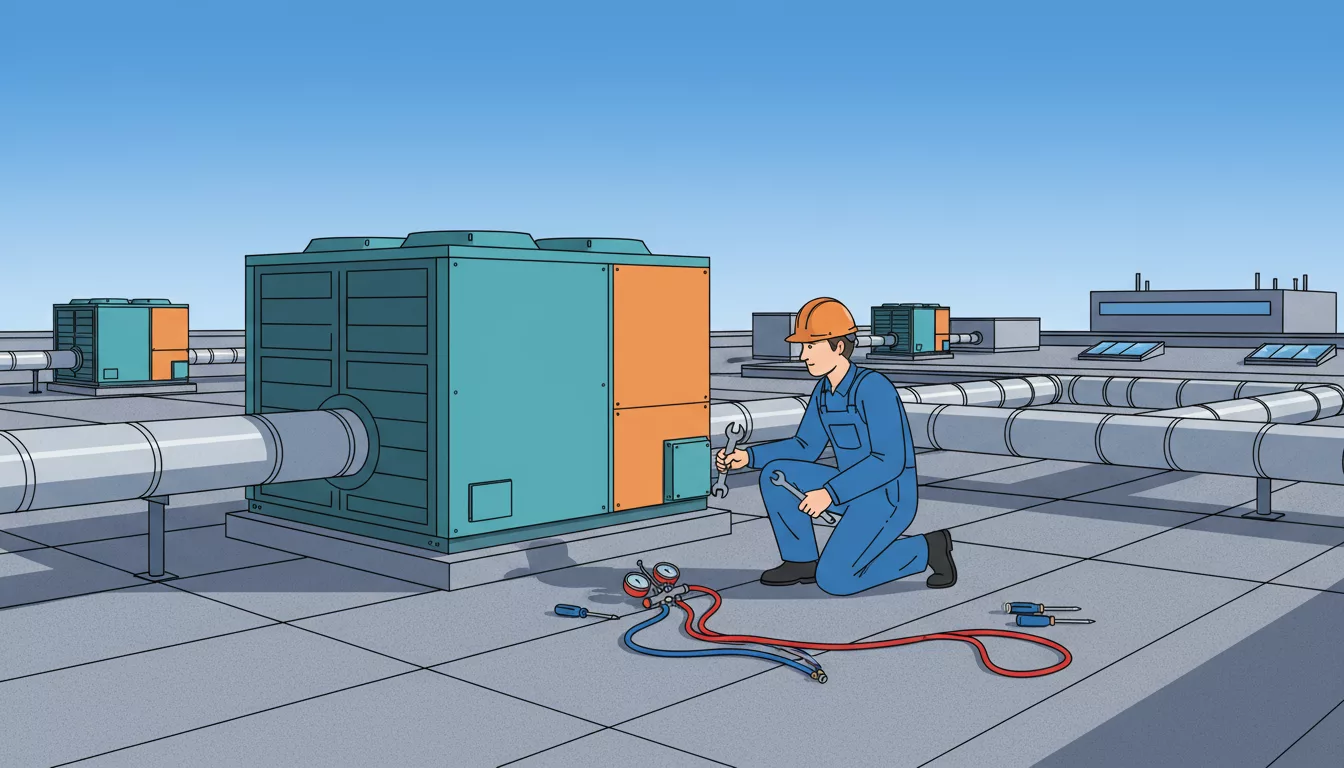
An Honest Look at the HVAC Career Path
HVAC technicians keep buildings comfortable. That's the simple version. The reality is that you're working with electrical systems, refrigerants, gas lines, ductwork, controls, and increasingly complex technology - in attics that hit 140 degrees in July and crawl spaces that make plumbers look like they have it easy. HVAC techs earn $42,000 to $95,000+ depending on their specialization, certifications, and whether they work residential, commercial, or industrial.
The trade has a few things going for it that most career paths don't. Climate control isn't optional - people need heat in winter and air conditioning in summer. Systems break at the worst possible times. And the equipment is getting more sophisticated every year, which means skilled technicians who understand modern systems are worth more, not less. The Bureau of Labor Statistics projects 6% growth through 2032, but the retirement wave among older techs means the real demand is much higher than that number suggests.
But nobody should walk into this career without knowing what they're signing up for. You'll work in extreme temperatures. You'll carry equipment up ladders and through tight spaces. You'll deal with frustrated homeowners who think their $15,000 system should have lasted forever. Emergency calls in January when a furnace dies are part of the job. This guide covers the full path - what the work actually involves, how to get trained, what certifications you need, what you'll earn at each stage, and which specializations are worth pursuing.
What HVAC Technicians Actually Do
HVAC stands for Heating, Ventilation, and Air Conditioning, but that barely scratches the surface. The work breaks down into several sectors, and your day looks completely different depending on which one you're in.
Residential Service and Repair
This is where most people start and where many stay. You're driving a van from house to house, diagnosing why the AC isn't cooling or the furnace isn't firing. One call is a dirty filter. The next is a cracked heat exchanger that could leak carbon monoxide. You troubleshoot using multimeters, manifold gauges, combustion analyzers, and thermal imaging cameras. The work requires both electrical and mechanical knowledge, plus enough people skills to explain to a homeowner why their 22-year-old system needs replacing.
Residential Installation
Installing complete systems in new construction or replacing old equipment in existing homes. This means sizing equipment using Manual J load calculations, designing duct layouts, running refrigerant lines, wiring thermostats and control boards, and making sure everything meets local code. Installation crews typically work in pairs, and the physical demands are significant - carrying a 150-pound condenser unit around the side of a house and setting it on a pad, or wrestling a furnace into an attic through a 22-inch opening.
Commercial HVAC
Office buildings, retail stores, restaurants, schools, hospitals. Commercial systems are bigger, more complex, and use different technology. Rooftop units (RTUs), variable air volume (VAV) systems, chillers, cooling towers, boilers, building automation systems (BAS) - the equipment is industrial-grade and the troubleshooting requires a deeper understanding of system design. Commercial techs often specialize in one type of equipment or one brand. The pay is generally better than residential, and the work is more predictable.
Industrial HVAC and Refrigeration
Manufacturing plants, data centers, pharmaceutical facilities, cold storage warehouses. Industrial systems can be massive - a chiller plant for a data center might cost millions. The refrigerants are different (ammonia systems, CO2 cascade systems), the pressures are higher, and the consequences of system failure can mean hundreds of thousands in lost product or production downtime. This is the highest-paying sector of HVAC work, and it requires the most specialized knowledge.
Controls and Building Automation
Modern buildings run on building automation systems - networked controllers, sensors, and software that manage HVAC equipment, lighting, and energy usage. Controls technicians program these systems, troubleshoot communication issues between devices, and optimize energy performance. This is where HVAC intersects with IT. If you like computers and technology, controls is a fast-growing specialization that pays well and involves less physical labor than field service work.
Energy Auditing and Green Building
Energy efficiency is a growing piece of the HVAC industry. Energy auditors evaluate buildings, recommend improvements, and help owners reduce utility costs. This work involves blower door tests, duct leakage testing, infrared scanning, and load calculations. Many states and utilities offer rebate programs that drive demand for certified energy auditors. BPI (Building Performance Institute) and RESNET certifications are the main credentials.
Education Requirements: What You Need to Start
You don't need a college degree. But HVAC has a steeper learning curve than some trades because it combines mechanical work, electrical work, refrigeration science, and increasingly, computer controls. Here's what you actually need.
Minimum Requirements
- High school diploma or GED - Required by every program and most employers.
- Basic math - Ohm's law, temperature conversions, BTU calculations, duct sizing formulas. You'll use math daily. These are practical skills worth highlighting on your resume.
- Physical fitness - Carrying equipment up ladders, working overhead, crawling through attics and crawl spaces. Must be comfortable at heights.
- Driver's license - Service techs drive company vehicles to job sites. Clean record preferred.
- Drug test - Standard across the industry. Random testing is common, especially on commercial job sites.
- Age 18+ - For apprenticeship programs and OSHA compliance on job sites.
Helpful But Not Required
Prior experience with electrical work, auto repair, or general construction gives you a head start. If you've changed out a car alternator or wired a light switch, you already have some of the mechanical intuition this trade needs. If you're wondering how to break into a career with no experience, HVAC has well-structured entry paths that don't require prior trade knowledge.
Training Paths: How to Get Into HVAC
There are several ways in. Some are faster. Some are more thorough. Here's an honest comparison:
| Feature | Trade School / Community College | Union Apprenticeship (UA/SMART) | Non-Union Apprenticeship | Employer-Sponsored Training |
|---|---|---|---|---|
| Duration | 6-24 months | 4-5 years | 3-4 years | Varies widely |
| Cost to you | $3,000-$25,000 | $0 (books/tools only) | $0-$3,000 | $0 |
| Income during training | None (or part-time) | $17-$28/hour starting | $14-$22/hour starting | $13-$18/hour starting |
| Classroom hours | 300-1,200 | ~1,000-1,700 total | ~576-800 total | Minimal |
| On-the-job hours | Limited lab time | ~8,000-10,000 | ~8,000 | All OJT |
| EPA 608 included | Usually yes | Yes | Usually yes | Sometimes |
| Benefits during training | None | Health + pension | Depends | Depends |
| Best for | Quick start + job placement | Best overall career path | Solid training, more flexibility | Earning immediately |
Trade School or Community College
HVAC trade school programs range from 6-month certificate programs to 2-year associate degrees. You'll learn refrigeration theory, electrical fundamentals, heating systems, air conditioning, heat pumps, ductwork design, and EPA regulations. Good programs include hands-on lab time with real equipment - not just textbook theory. Many programs also prepare you for the EPA Section 608 certification exam, which is legally required to handle refrigerants.
The best trade schools have strong job placement relationships with local contractors. Ask about placement rates and which companies recruit from the program before enrolling. A 6-month certificate can get you into an entry-level position fast, but you'll still need years of field experience to become truly competent.
Union Apprenticeship (UA or SMART)
The United Association (UA) represents HVAC mechanics and pipefitters. Sheet Metal Workers International Association (SMART) covers sheet metal and HVAC workers. Both run Joint Apprenticeship and Training Committees (JATCs) that combine on-the-job training with classroom instruction over 4-5 years.
Union apprenticeships are the gold standard for training quality. You earn while you learn, starting at 40-50% of journeyman rate with scheduled raises. Health insurance and pension contributions typically begin on day one. The training covers everything - residential, commercial, industrial, refrigeration, controls, and codes.
Getting in is competitive. Applications usually open once per year, and locals may accept 20-40 apprentices from hundreds of applicants. You'll need to pass an aptitude test, interview well, and pass drug screening. If you don't get in the first time, reapply. Work as a helper in the meantime to build experience.
Non-Union Apprenticeship
Organizations like Associated Builders and Contractors (ABC) and individual contractors run apprenticeship programs registered with the Department of Labor. These are typically 3-4 years and combine on-the-job training with classroom instruction. Entry is generally less competitive than union programs, but the quality depends heavily on the specific program and employer. Some are excellent. Others treat apprentices as cheap labor with minimal instruction.
Employer-Sponsored Training
Some HVAC companies, particularly large national outfits and franchises, hire people with no experience and run their own training programs. You start as a helper or installer's assistant and work your way up. The advantage is immediate income with zero tuition. The risk is that your training may be narrow - focused on whatever that company does - and your advancement depends on that employer investing in your development. If you go this route, study for your EPA 608 on your own and pursue additional certifications independently.
Certifications: What's Required and What's Worth Getting
HVAC has more certifications than most trades. Some are legally required. Others are optional but directly increase your pay and job options.
Required Certifications
| Certification | What It Is | Who Needs It | Cost |
|---|---|---|---|
| EPA Section 608 | License to purchase and handle refrigerants | Anyone who works with AC or refrigeration systems | $20-$40 exam fee |
| Type I (Small Appliances) | Covers systems with under 5 lbs of refrigerant | Window units, PTACs, small commercial reach-in coolers | Included in 608 exam |
| Type II (High Pressure) | Most residential and commercial AC/heat pumps | Most HVAC service techs | Included in 608 exam |
| Type III (Low Pressure) | Centrifugal chillers and other low-pressure systems | Commercial/industrial chiller techs | Included in 608 exam |
| Universal (all types) | Covers all refrigerant types and system sizes | Best option - get this | $20-$40 total |
The EPA 608 Universal certification is the baseline. You cannot legally buy refrigerant or work on systems containing refrigerant without it. Get Universal (all three types) - there's no reason to limit yourself.
State and Local Licensing
Licensing requirements vary significantly by state. Some states require a specific HVAC license. Others fold HVAC work into a mechanical contractor license. Some have no state-level HVAC license at all but require local permits and registration.
| State Licensing Approach | Examples |
|---|---|
| State HVAC license required | Florida, Texas, Arizona, Oregon, Tennessee, Georgia, Louisiana, Alabama |
| Mechanical contractor license | California (C-20), North Carolina, South Carolina, Virginia |
| No state license / local only | Ohio, Pennsylvania, New York (NYC separate), Illinois (Chicago separate), Missouri |
Check your specific state's contractor licensing board. Even in states without a state license, most jurisdictions require contractors to be registered and insured.
Industry Certifications Worth Getting
| Certification | Organization | What It Proves | Impact on Pay |
|---|---|---|---|
| NATE (North American Technician Excellence) | NATE | Competency in installation or service for specific system types | +$2-5/hour average |
| HVAC Excellence | HVAC Excellence/ESCO | Master HVAC technician designation | +$2-4/hour |
| R-410A Safety | ESCO or EPA-approved | Safe handling of R-410A high-pressure refrigerant | Required by many employers |
| OSHA 10/30 | OSHA | Job site safety training | Often required on commercial sites |
| BPI Building Analyst | Building Performance Institute | Energy auditing and building science | Opens energy audit work (+$5-15K/year) |
| Controls (Tridium Niagara, Honeywell, etc.) | Manufacturer-specific | Building automation programming | +$5-15/hour for controls techs |
NATE certification is the most widely recognized industry credential. Many employers offer raises or bonuses for NATE-certified techs. Get the core certifications first (EPA 608 Universal, R-410A), then add NATE after 1-2 years of experience.
Specializations: Where the Money Is
HVAC is broad enough that most experienced techs eventually specialize. Some specializations pay significantly more than others.
| Specialization | What You Do | Typical Pay Range | Barrier to Entry |
|---|---|---|---|
| Residential Service Tech | Diagnose and repair home HVAC systems | $45,000-$75,000 | Low - EPA 608 + 1-2 years experience |
| Commercial Service Tech | Maintain/repair rooftop units, VAVs, chillers | $55,000-$90,000 | Medium - 3-5 years commercial experience |
| Refrigeration Tech | Walk-in coolers, freezers, ice machines, supermarket racks | $55,000-$95,000 | Medium - EPA 608 + refrigeration training |
| Controls/BAS Technician | Program and troubleshoot building automation systems | $60,000-$105,000 | High - controls training + IT knowledge |
| Industrial Chiller Tech | Maintain large chiller plants (data centers, hospitals) | $65,000-$110,000 | High - 5+ years + manufacturer training |
| Test and Balance (TAB) | Measure and adjust airflow, water flow in HVAC systems | $55,000-$90,000 | Medium - AABC or NEBB certification |
| Energy Auditor | Evaluate building efficiency, recommend improvements | $50,000-$85,000 | Medium - BPI or RESNET certification |
| HVAC Sales/Comfort Advisor | Design and sell replacement systems to homeowners | $60,000-$130,000+ | Medium - technical knowledge + sales ability |
Controls and industrial work pay the most but require the most training. Residential service is the most accessible starting point. Sales/comfort advisor roles can be extremely lucrative if you're good with people - top performers in major markets earn well into six figures, but it's commission-driven income.
Salary Progression: What You'll Earn at Each Stage
Your pay in HVAC follows a clear progression tied to experience, certifications, and specialization. Here's what the path typically looks like:
| Career Stage | Experience | Typical Annual Pay | What You're Doing |
|---|---|---|---|
| Helper/Installer's Assistant | 0-1 years | $28,000-$36,000 | Carrying equipment, duct work, basic install tasks |
| Apprentice / Junior Tech | 1-2 years | $34,000-$44,000 | Basic service calls with supervision, installs |
| Mid-Level Technician | 2-4 years | $42,000-$58,000 | Running service calls independently, troubleshooting |
| Experienced Technician | 4-7 years | $55,000-$75,000 | Complex diagnostics, mentoring juniors, lead installer |
| Senior/Lead Technician | 7-12 years | $65,000-$90,000 | Most complex work, customer escalations, training |
| Specialist / Controls Tech | 5-10+ years | $70,000-$110,000 | Specialized systems, BAS, industrial equipment |
| Service Manager | 8-15+ years | $70,000-$100,000 | Managing technicians, dispatching, customer relations |
| Business Owner | 10+ years | $80,000-$200,000+ | Running your own HVAC company |
For a detailed breakdown by specialization and location, see our full HVAC technician salary guide.
A Day in the Life: Residential Service Technician
Here's what a typical summer day looks like for a residential HVAC service tech with 3 years of experience.
6:30 AM - Check your phone for the day's schedule. Dispatch has loaded 5 service calls, plus one callback from yesterday. Start loading your van with the parts you'll likely need based on the call descriptions.
7:15 AM - First call. "AC not cooling." You arrive, introduce yourself, and go to the thermostat. It's set to 72 but reading 81. Go outside to the condenser. Fan running, compressor humming, but the suction line isn't cold. Hook up your gauges - low on refrigerant. Find the leak with an electronic detector and UV dye. It's a fitting on the evaporator coil in the attic. You're in 135-degree attic space, sweating through your shirt in 10 minutes, brazing a repair. Evacuate, recharge, verify operation. Done in 90 minutes. Write up the invoice, explain to the homeowner what happened, drive to the next call.
9:30 AM - Second call. "Furnace won't turn on." It's summer, but this homeowner says they need heat for an elderly parent. Check the furnace - flame sensor covered in carbon. Pull it out, clean it with emery cloth, reinstall. System fires right up. A 15-minute fix plus 20 minutes of paperwork and driving.
10:30 AM - Third call. "New AC estimate." The homeowner's system is 18 years old and the compressor failed. You do a Manual J load calculation to properly size the replacement, measure the ductwork, check electrical capacity. Present options: entry-level system vs. high-efficiency two-stage vs. variable-speed inverter. Answer questions about SEER2 ratings, rebates, and financing. Leave the proposal with the homeowner.
12:00 PM - Lunch in the van. Check messages, return a call from yesterday's customer with a question.
12:45 PM - Fourth call. Callback from yesterday - "AC is making a noise." You installed a capacitor yesterday. Get on the roof (commercial building, one-story). The noise is the fan blade - slightly bent, hitting the shroud. Straighten it, problem solved. Ten-minute fix, but getting on and off the roof safely takes another ten minutes.
1:30 PM - Fifth call. "AC blowing warm air." You arrive, thermostat reading is fine, system is running. Go to the air handler. The evaporator coil is frozen solid - a block of ice. Could be airflow restriction (dirty filter, closed registers) or low refrigerant. Turn it off to thaw, check the filter - it's so clogged it's bowing inward. Replace it, explain the importance of filter changes. Come back later to check the system after the ice melts.
3:30 PM - Return to the frozen coil call. Ice is melted. Run the system with new filter - temperatures look normal. No refrigerant issues, just a severely restricted filter. Document everything.
4:15 PM - Last call. "Thermostat not working." The homeowner installed a smart thermostat themselves and wired it wrong. You sort out the wiring, configure the thermostat properly, and test operation. Explain how to use the scheduling features.
5:00 PM - Head back to the shop. Fill out remaining paperwork, order parts for tomorrow, restock the van. Clock out by 5:30.
The Physical Reality Nobody Mentions
This is a physically demanding career. Before you commit, understand what your body will deal with.
Temperature extremes. Attics in summer routinely exceed 130-140 degrees Fahrenheit. You can only work in those conditions for 15-20 minutes before needing to come down and cool off. In winter, you're working on rooftop units in freezing wind. Outdoor condensers and heat pumps don't care about the weather - they break when they break.
Confined spaces and heights. Crawl spaces, attics with 3 feet of clearance, mechanical rooms packed with equipment. You'll be on ladders daily, on rooftops regularly, and occasionally in genuinely tight spots. If you're claustrophobic or afraid of heights, this career will be challenging.
Heavy lifting. Condensers weigh 150-300 pounds. Furnaces weigh 80-150 pounds. Refrigerant cylinders, tools, duct sections - you're moving heavy objects regularly. Back injuries are common in the trade. Learn proper lifting technique and use equipment (dollies, hoists) whenever possible.
Chemical exposure. Refrigerants are generally safe in well-ventilated areas, but exposure in enclosed spaces can cause dizziness, frostbite from liquid contact, or oxygen displacement. Older systems may contain R-22 or even R-12. Brazing and soldering produce fumes. Always work with proper ventilation and PPE.
Electrical hazards. HVAC systems run on 240V for residential, up to 480V for commercial. Electrical troubleshooting on live systems is part of the job. Respect the voltage, follow lockout/tagout procedures, and never take shortcuts with electrical safety.
On-call stress. Many service companies require on-call rotation. When a furnace dies in January or an AC fails during a heat wave, someone has to respond. On-call can mean nights, weekends, and holidays. The overtime pay is good. The disruption to your personal life is real.
Getting Started: A 6-Step Plan
Here's a concrete path from zero to working HVAC technician:
Step 1: Get Your Baseline Education (Month 1-2)
If you don't have a high school diploma or GED, get one. While you're at it, brush up on basic math - Ohm's law (V = I x R), temperature conversions, BTU calculations, and basic geometry for duct sizing. Free online resources can get you up to speed.
Step 2: Choose Your Training Path (Month 2-3)
Research options in your area:
- Find your local UA (plumbers and pipefitters) and SMART (sheet metal workers) union halls. Ask when apprenticeship applications open.
- Research community college HVAC programs within commuting distance.
- Check local HVAC companies for helper positions (search job boards for "HVAC helper" or "HVAC apprentice").
- Look into ABC (Associated Builders and Contractors) chapters in your area.
Apply to multiple paths simultaneously. Don't put all your eggs in one basket, especially with competitive union programs. Career changers often have transferable skills that make them competitive applicants.
Step 3: Get Your EPA 608 Universal Certification (Month 3-4)
You can take the EPA 608 exam before starting work. Study materials are available online (EPA's own study guide is free). The exam has four sections: Core, Type I, Type II, and Type III. Pass all four for Universal certification. Many HVAC supply houses offer the proctored exam for $20-$40. Having this before you apply for jobs shows initiative and eliminates a training step for employers.
Step 4: Start Working (Month 3-6)
Whether through a formal program or an entry-level position, get into the field as soon as possible. Your first months will be humbling - you'll make mistakes, work slowly, and feel overwhelmed by how much you don't know. That's normal. Every experienced tech went through the same thing.
Step 5: Build Your Skills and Get Certified (Years 1-3)
During your first few years:
- Pass your R-410A safety certification
- Complete OSHA 10 if not already done
- Study for NATE certification (typically after 2 years of experience)
- Learn to read and understand technical manuals, wiring diagrams, and code books
- Start identifying which specialization interests you
- Build professional connections in the trade
Step 6: Specialize and Advance (Years 3-7)
After building a solid foundation, pursue the specialization that fits your interests and career goals. Whether that's controls, refrigeration, commercial service, or starting your own business, the path forward depends on deliberate choices about what training to pursue and what experience to seek out.
Career Advancement: Where HVAC Takes You
The career path doesn't stop at "experienced technician." Here are the realistic advancement options:
Senior Technician / Lead Tech
The most experienced tech on the team. You handle the calls nobody else can figure out, train new technicians, and serve as the go-to for complex diagnostics. Senior techs at established companies often earn $75,000-$95,000 with overtime.
Service Manager
Move from the van to the office. You dispatch technicians, handle customer escalations, manage inventory, and oversee the service department's profitability. Service managers typically earn $70,000-$100,000. Good interview preparation helps when competing for these positions.
Controls/BAS Engineer
If you go the controls route, you can become a building automation engineer - designing control systems, programming complex sequences, and commissioning building automation for new construction projects. This is the closest thing to an office job in HVAC, and it pays $80,000-$120,000+.
Estimator / Project Manager
Commercial HVAC companies need people who can read blueprints, estimate material and labor costs, and manage installation projects. This requires technical knowledge plus business skills. Project managers in commercial HVAC earn $75,000-$110,000. Understanding salary negotiation helps when pursuing these roles.
HVAC Instructor
Trade schools and community colleges need experienced technicians to teach the next generation. Teaching typically requires 5-10 years of field experience plus an industry certification. The pay is lower than field work ($45,000-$70,000) but the schedule is regular and the physical demands are minimal.
Business Owner
Many HVAC techs eventually start their own companies. A one-truck operation doing residential service can generate $150,000-$300,000 in revenue. A well-run company with 5-10 trucks can be a $1-3 million business. Starting an HVAC company requires a contractor's license (in most states), insurance, equipment, and enough industry reputation to generate leads. The earning potential is the highest of any path, but so is the risk and the management headache.
Facilities Management
Large buildings (hospitals, universities, corporate campuses) employ full-time HVAC mechanics and facilities managers. These positions offer stable hours, benefits, retirement plans, and none of the residential on-call stress. Facilities positions typically pay $55,000-$85,000 for technicians, $75,000-$110,000 for directors.
7 Mistakes That Hold New HVAC Techs Back
- Skipping the EPA 608 before job searching. It's cheap, not that difficult, and having it before your first interview shows you're serious. There's no reason not to have it.
- Taking the first job without researching the company. Not all HVAC companies treat employees well. Some have high turnover for a reason. Talk to current technicians if possible. Check online reviews from employees, not just customers.
- Avoiding electrical troubleshooting. A lot of new techs are nervous about electrical work and try to avoid it. Don't. Electrical troubleshooting is where the real money is in HVAC. Study it, practice it, get comfortable with a multimeter. Techs who can diagnose control boards and wiring issues are worth significantly more.
- Not getting NATE certified. Some techs think experience alone is enough. NATE certification demonstrates competency to employers and customers, and many companies pay $2-5 more per hour for NATE-certified techs. That adds up to $4,000-$10,000 more per year.
- Burning bridges. HVAC is a surprisingly small industry locally. Contractors know each other. Supply house employees know everyone. Your reputation follows you. Treat every job and every person professionally, even if you're leaving a bad situation.
- Refusing to learn controls and technology. "I got into the trades to work with my hands, not sit at a computer." This attitude will limit your career as systems become increasingly connected and automated. You don't have to become a programmer, but understanding building automation basics keeps you relevant and well-paid.
- Waiting too long to specialize. Being a generalist residential tech is fine, but techs who develop expertise in a specific area (controls, refrigeration, commercial chillers, energy efficiency) command higher pay. By year 5, you should have a clear direction. If you're considering this career at 30 or later, specializing quickly is even more important.
Career Outlook: Why HVAC Is a Strong Bet
The HVAC industry is in a favorable position for the foreseeable future. Here's what's driving demand:
Aging workforce. A significant portion of experienced HVAC technicians are approaching retirement. The average age of an HVAC tech is rising, and the industry isn't replacing retirees fast enough. This creates opportunity and upward pressure on wages.
Equipment evolution. The transition from R-22 to R-410A and now to R-454B, the move toward heat pumps and electrification, and increasingly complex variable-speed and inverter-driven equipment all require more skilled technicians - not fewer. Newer systems are better for the environment but harder to work on.
Climate trends. Hotter summers and longer cooling seasons in many parts of the country mean more AC installations, more service calls, and more system replacements. Heat pump adoption is growing rapidly as states push building electrification.
Building boom. New construction - residential and commercial - drives installation work. Every new home and building needs HVAC systems installed and eventually maintained.
Energy efficiency regulations. Tighter efficiency standards (like the 2023 SEER2 requirements) make older systems obsolete faster, driving replacement sales and installation work. Utility rebate programs create additional demand for qualified installers.
Automation-resistant. An AI can't diagnose a mysterious noise in someone's attic. A robot can't snake through a crawl space to replace ductwork. HVAC service work requires hands-on problem-solving in unpredictable environments - exactly the kind of work that's hardest to automate. The trades industry overview covers this broader trend across skilled labor.
The bottom line: if you're willing to put in 3-5 years of apprenticeship-level training, tolerate physical demands and weather extremes, and keep learning as technology evolves, HVAC offers a career with genuine job security, strong earnings, and multiple paths to advancement. You don't need a college degree, you don't need wealthy parents, and you don't need to be lucky. You need to show up, work hard, and keep getting better.