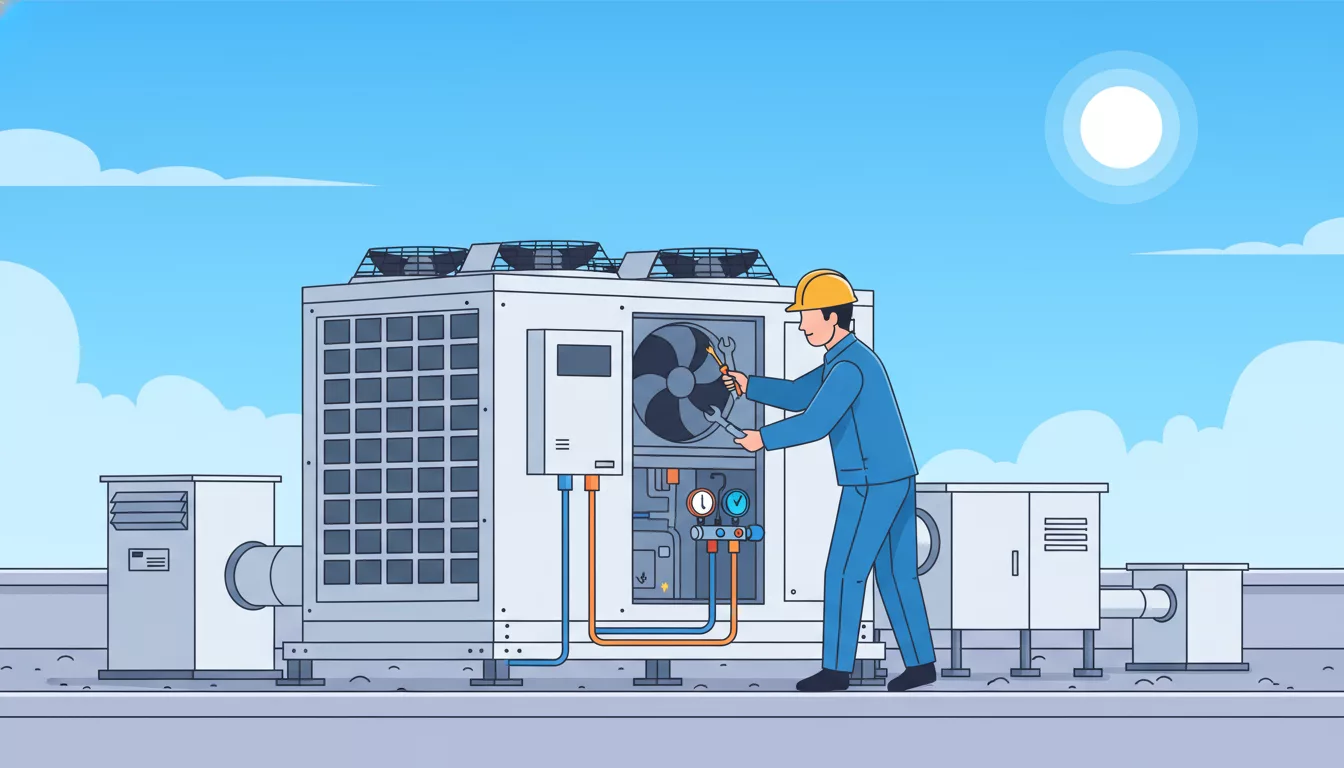
5:30 AM: The Morning That Starts in the Dark
HVAC technicians don't get the luxury of a slow morning. The alarm goes off at 5:30, and by 6:15 you're in your service van reviewing the day's dispatch board on your tablet. Most companies load your schedule the night before - anywhere from 4 to 8 calls depending on complexity. Summer and winter are the brutal seasons. When it's 95 degrees and someone's AC is dead, you're not casually rolling up at 9 AM.
The morning prep is more involved than people realize. You're checking refrigerant levels in your tanks, making sure your recovery machine is charged, verifying you have the common capacitors, contactors, and control boards that fail most often. Running back to the supply house mid-day kills your productivity and your paycheck if you're on commission or piece-rate. (Wondering what those paychecks actually look like? See our HVAC technician salary guide for real numbers.)
Coffee happens in the van. Breakfast is whatever you grabbed on the way out. By 6:30, you're driving to your first call.
7:00 AM: First Call - The Diagnostic Puzzle
Your first call is a residential no-cool complaint. The homeowner says the system "just stopped working yesterday." That could mean fifty different things. You pull up to the house, grab your gauges, multimeter, and thermometer, and head to the outdoor unit first.
Here's what non-technicians don't understand: HVAC diagnosis is detective work. You're not just swapping parts until something works - that's how you go broke and get fired. You're reading pressures, measuring temperatures at specific points in the system, checking electrical values, and comparing them against what the system should be doing based on outdoor and indoor conditions.
This first call turns out to be a bad run capacitor on the compressor. The capacitor is bulging at the top - a classic visual tell. You verify with your multimeter (reads 28 microfarads instead of the rated 45), pull the disconnect, swap the capacitor in about 10 minutes, and the system fires right up. Superheat and subcooling check out. You document everything in your service software, get the customer's signature, and you're back in the van by 7:45.
That's a win. Fast diagnosis, common part on the van, happy customer. Not every call goes like that.
8:15 AM: Second Call - The One That Tests You
Call two is an intermittent heating issue in a commercial building. The rooftop unit works sometimes but trips out randomly. Intermittent problems are the worst because the system might be running perfectly fine when you arrive. You can't diagnose a problem that isn't happening.
You spend 45 minutes on the roof with this unit. You check all the obvious stuff first - dirty flame sensor, weak inducer motor, cracked heat exchanger (which would be a condemned unit). Everything looks fine. The system runs through three heat cycles while you watch. Then on the fourth cycle, you see it - the pressure switch is slow to close because the drain line for the inducer is partially blocked, causing a slight back-pressure that makes the switch bounce.
You clear the drain, verify the switch closes cleanly, run five more cycles to confirm stability. Total time: about an hour and fifteen minutes on one call. If you're on a commission structure, long calls like this hurt your daily revenue. But if you rush it and the problem comes back, that's a callback that costs your company money and your reputation credibility.
10:00 AM: The Supply House Run You Tried to Avoid
Your third call needs a blower motor. You carry common sizes on the van, but this is an older Lennox unit with a proprietary motor mount. You call the supply house, confirm they have it in stock, and make the 20-minute detour. Some days you can avoid supply runs entirely. Other days you're making two or three trips because every call seems to need something unusual.
The supply house is its own social scene. You run into other techs, swap war stories about difficult calls, and inevitably hear about someone who just got hired away by another company for more per hour. The HVAC labor market in 2026 is incredibly tight - experienced techs with EPA certifications and a clean driving record can essentially name their price. (Thinking about getting in? Our guide to becoming an HVAC technician covers the full path.)
10:45 AM: Back to the Blower Motor Call
You return to the customer's house with the motor. Replacing a blower motor sounds simple - unbolt old, bolt new. In reality, you're working in a cramped furnace closet, disconnecting wiring, removing the blower housing, swapping the motor and wheel, checking the balance, and reassembling. Then you verify amperage draw, airflow across the coil, and temperature rise.
The whole replacement takes about an hour. While you're in there, you notice the evaporator coil is dirty. You mention it to the homeowner, recommend a cleaning on their next maintenance visit, and note it in your service record. You don't upsell aggressively - that's a rookie move that kills trust. You inform, let them decide, and move on.
12:00 PM: Lunch in the Van
Lunch is 30 minutes if you're lucky. Most residential HVAC techs eat in their van between calls. You're parked in a gas station lot or a shady spot, eating a sandwich and catching up on paperwork. Every call needs documentation - what you found, what you did, what parts you used, recommendations for next time.
This is also when you check your afternoon schedule. Dispatch may have added calls, rearranged your route, or flagged a priority emergency that bumps everything else back. In peak season, you might have six calls scheduled and finish with eight because emergencies keep stacking.
The van in summer is an oven if you turn it off. The van in winter is a freezer. Your daily workspace is wherever you park, whatever attic or crawlspace or rooftop the equipment happens to live in. Comfort is not part of the job description.
12:30 PM: The Attic Call
Afternoon call one: a system in an attic. In May, an attic in the southern US is already pushing 130 degrees. You're crawling through blown insulation with a headlamp, tools on your belt, trying to access an air handler that was installed by someone who apparently didn't think a human would ever need to service it.
The access restrictions in residential HVAC are absurd. Air handlers crammed into 3-foot crawlspaces. Condensing units pinched between a fence and a wall with 8 inches of clearance. Furnaces in closets where you literally cannot fit a recovery machine. Every technician has stories about installations that should be illegal.
This attic call is a refrigerant leak. You find it with your electronic leak detector at a flare fitting on the evaporator coil. The flare was under-torqued during installation - probably five years ago - and it's been slowly leaking since. You recover the remaining refrigerant (EPA requires recovery, no venting), repair the fitting, pull a vacuum on the system to remove moisture and air, and recharge to manufacturer specs by weight.
Total time in the attic: nearly two hours. You come down drenched in sweat, insulation fibers stuck to every exposed surface of your skin, and immediately drink an entire 32-ounce water bottle. Heat-related illness is a real occupational hazard that the industry takes more seriously now than it did ten years ago.
2:45 PM: Maintenance Call - The Easy Money
Not every call is an emergency repair. Your next stop is a scheduled maintenance visit - a twice-yearly tune-up that the customer pays for through a service agreement. These are the bread-and-butter calls that keep a company profitable during shoulder seasons when nothing is breaking.
A proper maintenance visit covers:
- Electrical connections - tighten, check amp draws against rating plates
- Capacitors - test microfarad readings, replace if weak (proactive, prevents failures)
- Refrigerant pressures - verify superheat and subcooling, check for changes from last visit
- Coil condition - clean if needed, check for corrosion or damage
- Drain line - clear, treat with algae tabs
- Thermostat calibration - verify it reads correctly and communicates properly
- Ductwork inspection - check accessible sections for disconnects or damage
- Filter - replace or remind customer (this alone prevents half of service calls)
- Safety controls - verify high-pressure switch, low-pressure switch, and limit switches are operational
A good tech completes a maintenance in 45-60 minutes. You're documenting every measurement so next year's tech (or you) can spot trends. If a compressor's amp draw went from 12 to 14.5 amps between visits, that's early warning of a mechanical issue worth watching.
3:45 PM: The Emergency Add-On
Dispatch calls. A no-heat emergency just came in - elderly customer, and the temperature is dropping tonight. Can you fit one more? You check your location, calculate drive time, and say yes. This is the reality of HVAC: the schedule is a suggestion, not a contract. When someone's 80-year-old grandmother has no heat in January, you figure it out.
This call turns out to be a failed ignitor on a gas furnace. You have the part on the van (silicon nitride ignitors are one of those things you always carry), and the swap takes 15 minutes. You run the system through three cycles, verify proper combustion with your combustion analyzer, and leave a grateful customer with a working furnace by 4:30.
4:30 PM: Wrapping Up the Day
Back in the van for the drive to the shop - or home if your company does van-take-home. The end of the day involves finishing paperwork, uploading photos of anything you found during calls, submitting parts orders for tomorrow's scheduled work, and restocking your van from the company warehouse.
Some techs skip the restocking step. Those are the techs who make supply house runs every day and wonder why their paychecks are smaller. The organized techs spend 20 minutes at the end of each day making sure their van is ready for tomorrow. It's boring but it's the difference between running five calls and running seven.
You also check your earnings for the day. On a commission-based pay structure (common in residential HVAC), a five-call day with a blower motor replacement, a refrigerant repair, and three standard calls might net you -600 in commission depending on your company's structure. That's on top of your base hourly rate. Strong techs in good markets consistently earn ,000-,000+ with overtime and commission combined.
5:00 PM: What the Day Actually Cost You
By the time you get home, your body has been through it. You climbed on two roofs, spent two hours in a 130-degree attic, lifted a 60-pound blower motor, crouched in a mechanical room designed for elves, and drove 85 miles between calls. Your knees remind you that concrete is hard. Your lower back reminds you that crawlspaces aren't designed for adults.
The shower at the end of a summer HVAC day is genuinely one of the best feelings in the world. You wash off insulation fibers, refrigerant oil, condensate water, and enough sweat to fill a bucket. Then you eat a meal that would alarm a nutritionist, because you burned through 4,000 calories working in heat all day.
What Nobody Tells You About HVAC as a Career
The variety keeps it interesting. Unlike a factory job where you do the same thing every day, HVAC techs face a different puzzle every single call. Different equipment, different symptoms, different environments. Boredom is rare. Frustration is common, but boredom isn't.
The money is genuinely good - and getting better. The skilled trades shortage means HVAC companies are desperate for competent technicians. Starting pay for green helpers is -22/hour, but experienced service techs with NATE certifications and EPA universal licenses routinely earn ,000-,000. Specialists in commercial refrigeration or building automation can push past ,000.
Your body will tell you eventually. The combination of heat exposure, awkward positions, heavy lifting, and chemical exposure (refrigerants, solvents, brazing flux) takes a toll over decades. The technicians who last 25+ years in the field are the ones who stretch, hydrate religiously, wear proper PPE, and don't try to hero through injuries.
The on-call rotation is real. Most HVAC companies have an on-call schedule where you carry the emergency phone for a week at a time. That means 2 AM calls when a restaurant's walk-in cooler is down and ,000 worth of food is warming up. The extra pay is nice. The sleep disruption is not.
You become everyone's friend in summer. Once people find out you work in HVAC, every neighbor, cousin, and old high school friend wants free advice about their system. "Hey, my AC is making a weird noise, can you just come look at it?" This never stops. Set boundaries early or you'll work 7 days a week for free.
Technology is changing the job. Modern systems are increasingly complex - variable-speed compressors, communicating equipment with proprietary diagnostics, smart thermostats with Wi-Fi integration, building automation systems with BACnet protocols. The techs who adapt and learn the new technology earn more. The ones who refuse to learn anything beyond basic split systems get left behind. Continuous education isn't optional in this field.
Is HVAC Right for You?
HVAC is a career for people who like solving problems, don't mind physical work, and want a skill that's recession-proof and impossible to outsource. Someone will always need their AC fixed, and a robot isn't doing it anytime soon - not when the equipment is in a 130-degree attic with 2 feet of clearance.
The entry path is accessible. Trade schools and community colleges offer 6-month to 2-year programs. Many companies hire helpers with zero experience and train them on the job while they pursue certifications. Within 3-4 years, a motivated technician can go from helper to lead service tech earning well above the national median income.
But be honest with yourself about the physical demands. If you have chronic back problems, fear of heights, or can't handle extreme heat, this job will chew you up. The techs who thrive are physically capable, mentally sharp, and genuinely enjoy the puzzle of figuring out why a system isn't doing what it should.
Ready to start exploring? Check our complete guide to becoming an HVAC technician, prepare with real HVAC interview questions, or review the latest HVAC salary data to see what you could earn in your area.