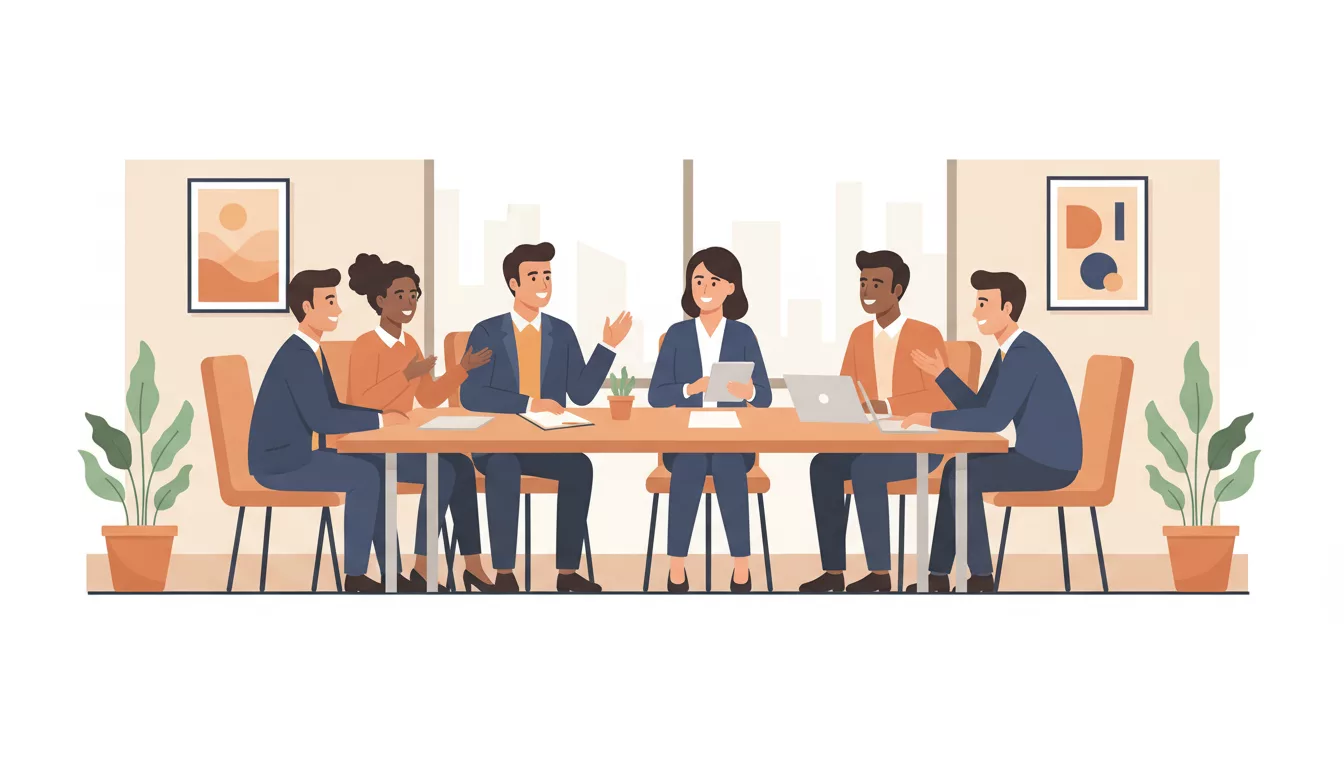
You walk into the interview room and instead of one person sitting across from you, there are five. They're all watching, all taking notes, and they all have questions. That's a group interview — and if you're not ready for it, the experience can rattle even confident candidates.
Group interviews are becoming more common, especially at companies hiring for customer-facing roles, leadership positions, and team-heavy environments. But most interview advice online assumes you're talking to one person. Group dynamics change everything.
Here's how to prepare so you stand out — not just survive.
What Is a Group Interview?
A group interview is any interview involving more than two people. There are two main types:
- Panel interviews: Multiple interviewers question one candidate. Common for corporate roles, government positions, and senior-level jobs. Many panel interviews now happen over video platforms like Zoom or Teams.
- Group candidate interviews: Multiple candidates are interviewed simultaneously, often through group activities or discussions. Common in retail, hospitality, and sales.
Some companies use both formats in the same hiring process — a group activity round followed by a panel interview. Knowing which type you're walking into helps you prepare the right way.
Why Companies Use Group Interviews
Group interviews aren't just about saving time (though that's part of it). They let hiring managers observe things that one-on-one interviews can't reveal:
- How you collaborate. Do you steamroll others? Shut down? Or naturally find your role in a group?
- Communication under pressure. Competing for airtime with other candidates or answering rapid-fire questions from a panel shows how you handle stress.
- Leadership tendencies. Not whether you dominate, but whether you contribute ideas, build on others' points, and keep discussions moving.
- Cultural fit. How you interact with multiple personalities gives a broader picture than a scripted conversation with one recruiter.
How to Prepare for a Panel Interview
Panel interviews can feel like an interrogation if you're not ready. But with the right approach, they're actually easier to manage than you'd think.
1. Research Every Panelist
Ask the recruiter or HR contact who'll be on the panel. Then look each person up on LinkedIn. Understanding their role helps you tailor answers — the engineering manager cares about different things than the HR director.
If you can't find out who's on the panel, research the department and typical roles that would be involved in hiring for your position.
2. Prepare for Different Question Styles
Each panelist usually asks questions related to their expertise. You might get:
- Technical questions from the hiring manager
- Behavioral questions from HR
- Team dynamics questions from a potential peer
- Big-picture questions from a senior leader
Practice your introduction and have stories ready that cover technical skills, teamwork, problem-solving, and leadership. The STAR method (Situation, Task, Action, Result) works well for behavioral questions across different interviewers.
3. Make Eye Contact with Everyone
This is the number one mistake candidates make in panel interviews. They only look at the person who asked the question. Instead, start your answer by making eye contact with the questioner, then naturally shift your gaze to include other panelists as you speak. End by looking back at the person who asked.
It sounds simple but it makes a huge difference. Panelists who feel ignored are less likely to advocate for you afterward.
4. Address Panelists by Name
When you arrive, note where each person is sitting and remember their names. Use names naturally during the conversation: "That's a great question, Sarah. In my last role..."
If you're terrible with names, sketch a quick seating chart on your notepad when they introduce themselves.
5. Prepare Questions for Different Roles
At the end, when they ask if you have questions, don't just aim everything at the hiring manager. Ask the potential teammate about day-to-day culture. Ask the senior leader about company direction. This shows awareness and genuine interest.
Need ideas? Check out our list of smart questions to ask your interviewer.
How to Prepare for a Group Candidate Interview
Group candidate interviews are a different animal. You're not just answering questions — you're being evaluated alongside your competition in real time.
1. Be Collaborative, Not Competitive
The biggest trap in group interviews is trying to "win." Candidates who talk over others, dismiss ideas, or constantly one-up the room almost always get eliminated first.
Instead, listen actively. Build on what others say ("I agree with what James mentioned, and I'd add..."). This shows leadership without aggression.
2. Speak Up Early
First impressions form fast in group settings. Make sure you contribute in the first few minutes. If there's a group discussion, offer an idea early. If there are individual introductions, craft a memorable but concise summary of your background.
You don't need to talk the most — but you can't be invisible either.
3. Take Notes
Bringing a notebook and jotting things down signals professionalism. It also gives you something to reference when building on others' points. "Going back to what was mentioned earlier about customer retention..."
4. Find Your Natural Role
In group activities, people naturally fall into roles: the organizer, the idea generator, the devil's advocate, the summarizer. Don't force a role that isn't you, but be aware of what's missing. If nobody's keeping the group on track, step into that organizing role. If everyone's agreeing too quickly, ask a thoughtful question.
5. Treat Other Candidates Like Future Colleagues
Some of the people in the room might become your coworkers. Interviewers notice how you treat fellow candidates. Are you encouraging? Do you listen? Do you give others space to contribute?
Being genuinely nice isn't a strategy — but it is noticeable.
Common Group Interview Questions (And How to Answer Them)
Whether it's a panel or a group candidate format, certain questions come up repeatedly. Here's how to handle the most common ones:
"Tell me about yourself."
In a group setting, keep this tighter than you would one-on-one. About 60-90 seconds. Focus on your most relevant experience and what you'd bring to this specific role. Our full guide on answering "Tell me about yourself" breaks this down further.
"What's your greatest strength?"
Pick a strength that's relevant to the role AND to group dynamics. Adaptability, communication, and problem-solving play well in group interview contexts. See our guide to answering this question for specific examples.
"Why do you want to work here?"
In a panel interview, this question often comes from the hiring manager or senior leader. Reference something specific — a recent company initiative, their approach to the industry, or something you learned from researching the panelists. Generic answers ("I love your company culture!") fall flat, especially when everyone in the room knows the company inside out. Here's a deeper look at answering "Why do you want to work here?"
"What's your greatest weakness?"
Panel members often ask this to see how self-aware you are. Don't give a fake weakness ("I work too hard"). Pick something genuine that you've actively worked to improve. Our guide to answering the greatest weakness question has specific examples.
"Describe a time you worked on a team."
This is practically guaranteed in group interviews. Use a specific story with clear results. Highlight how you contributed to the team's success, not just your individual achievement. If the team hit a snag, explain how you helped navigate it — that's more interesting than a smooth-sailing story.
"Do you have any questions for us?"
Always yes. In a panel, direct different questions to different panelists. In a group candidate setting, ask something that shows you've been paying attention to the discussion. Avoid questions about salary or benefits at this stage — save those for later rounds.
What to Wear to a Group Interview
Dress slightly more formal than the company's daily dress code. In a group setting, you want to look polished without being overdressed. For detailed guidance, check out our complete interview outfit guide.
One thing to keep in mind: in group candidate interviews, you'll likely be standing, moving around, and possibly doing activities. Make sure your outfit is comfortable enough for that.
Group Interview Body Language Tips
Body language matters more in group interviews because there are more people watching you — and you're being observed even when you're not speaking.
- Sit up straight but don't be rigid. Lean slightly forward when someone's speaking to show engagement.
- Nod when others make good points. This shows you're listening, not just waiting for your turn to talk.
- Avoid crossing your arms. It reads as defensive or closed off, especially when you're surrounded by people.
- Smile naturally. Not a frozen grin, but genuine warmth. Group interviews are social — act like it.
- Use open hand gestures when speaking. It makes you appear confident and inclusive.
After the Group Interview
The interview doesn't end when you walk out the door. Follow-up matters — maybe even more than in a one-on-one interview.
Send Individual Thank-You Emails
For panel interviews, send a separate thank-you email to each panelist. Reference something specific from your conversation with that person. This is where your notes (and that seating chart) pay off.
For group candidate interviews, send a thank-you to the facilitator or primary interviewer.
Follow Up Appropriately
If you haven't heard back within the timeframe they mentioned, it's fine to send a polite follow-up email. Keep it brief and professional.
5 Mistakes That Kill Your Chances in Group Interviews
- Dominating the conversation. Talking the most doesn't mean you'll score the highest. Quality over quantity. Every time.
- Being invisible. The other extreme. If panelists can't remember what you said, they won't remember you at all.
- Ignoring other candidates. In group formats, treating fellow candidates as competitors rather than collaborators is a red flag for hiring managers.
- Not preparing for the format. A panel interview requires different prep than a group activity. Know what you're walking into.
- Forgetting names. In a room full of people, using someone's name is powerful. Not knowing it is awkward.
Group Interview Checklist
Use this quick checklist the night before:
- ☐ Researched the company and role thoroughly
- ☐ Looked up panelists on LinkedIn (if panel format)
- ☐ Prepared 3-4 STAR stories covering teamwork, leadership, problem-solving
- ☐ Practiced a 60-90 second "tell me about yourself"
- ☐ Prepared questions for different interviewers
- ☐ Outfit chosen and comfortable for group activities
- ☐ Notepad and pen packed
- ☐ Copies of resume (one for each panelist, plus extras)
- ☐ Directions confirmed, planning to arrive 10-15 minutes early
Frequently Asked Questions
How long do group interviews usually last?
Panel interviews typically run 30-60 minutes. Group candidate interviews can last 1-3 hours, especially if they include activities, presentations, or multiple rounds. Ask the recruiter beforehand so you can plan accordingly.
Are group interviews harder than regular interviews?
They're different, not necessarily harder. The social dynamics add complexity, but they also give you more opportunities to show skills like teamwork and communication that are difficult to demonstrate one-on-one. If you're naturally collaborative, you might actually prefer them.
What if I'm an introvert?
Group interviews can feel draining for introverts, but that doesn't mean you'll do poorly. Focus on making a few thoughtful, substantive contributions rather than trying to match the volume of more talkative candidates. Quality stands out more than quantity. Prepare your key points in advance so you're not improvising under pressure.
Should I bring anything to a group interview?
Yes — bring copies of your resume (enough for each panelist plus a couple extras), a notepad, a pen, and any portfolio or work samples if relevant. Having physical copies ready when five people are sitting across from you shows preparation.
How do I stand out without being aggressive?
Build on others' ideas, ask insightful questions, and offer specific examples from your experience. The candidates who stand out are usually the ones who make the group better — not the ones who try to outshine everyone. Think of it as demonstrating leadership through contribution, not domination.
Keep Reading
- How to Answer "Tell Me About Yourself" in a Job Interview
- How to Prepare for a Virtual Interview
- What to Wear to a Job Interview in 2026
- How to Ace a Phone Interview in 2026
- 35+ Smart Questions to Ask Your Interviewer
- How to Write the Perfect Follow-Up Email After an Interview
- How to Write a Thank You Email After an Interview
- How to Answer What Is Your Greatest Strength?
- How to Answer What Is Your Greatest Weakness?