5:30 AM: Alarm, Scrubs, and the Mental Shift
The alarm goes off at 5:30 for a 7 AM shift, and the first thing most CNAs and medical assistants do is check their phone. Not for social media - for the group chat. Staffing updates come in early. Someone called out. The floor is short. You're getting an extra patient assignment today. This is the reality of healthcare staffing in 2026, and you learn to absorb it before your feet hit the floor.
Scrubs go on, hair gets pulled back, badge gets clipped. Some CNAs keep a small kit in their car - extra pens, a backup stethoscope, granola bars for when lunch gets skipped. Experienced healthcare workers know that once you walk through those doors, your personal timeline stops mattering. You eat when you can, sit when you can, and use the bathroom when you can. Planning for that reality starts at home.
The drive in is usually short. Most CNAs and MAs pick jobs close to home because 12-hour shifts plus a 45-minute commute each way adds up fast. You pull into the parking lot next to the same cars you see every day. There's a comfort in that - the same people showing up, doing hard work, holding the whole system together.
6:45 AM: Shift Report and the Handoff
You arrive 15 minutes early because shift report starts at 6:45. The night shift CNA walks you through each patient on your assignment - who slept well, who didn't, who had a fall risk incident at 3 AM, who's NPO (nothing by mouth) for a procedure later today. You're scribbling notes on a folded piece of paper or a printed assignment sheet because trying to remember 8-12 patients' overnight details without notes is a recipe for mistakes.
The handoff is the most important 10 minutes of your day. A good night shift report tells you exactly what to expect. A vague one means you're walking into surprises. "Mrs. Henderson in 204 was confused overnight and kept trying to get out of bed" means you're checking on her first. "Mr. Garcia in 210 has a new IV and is complaining of pain at the site" means you're flagging that for the nurse immediately.
After report, you do a quick round on all your patients. Not full vitals yet - just a visual check. Are they breathing comfortably? Are they safe in bed? Is anyone calling out? This initial sweep takes five minutes and catches problems that might have developed in the gap between the night shift's last round and your arrival.
7:15 AM: Morning Vitals - The Assembly Line
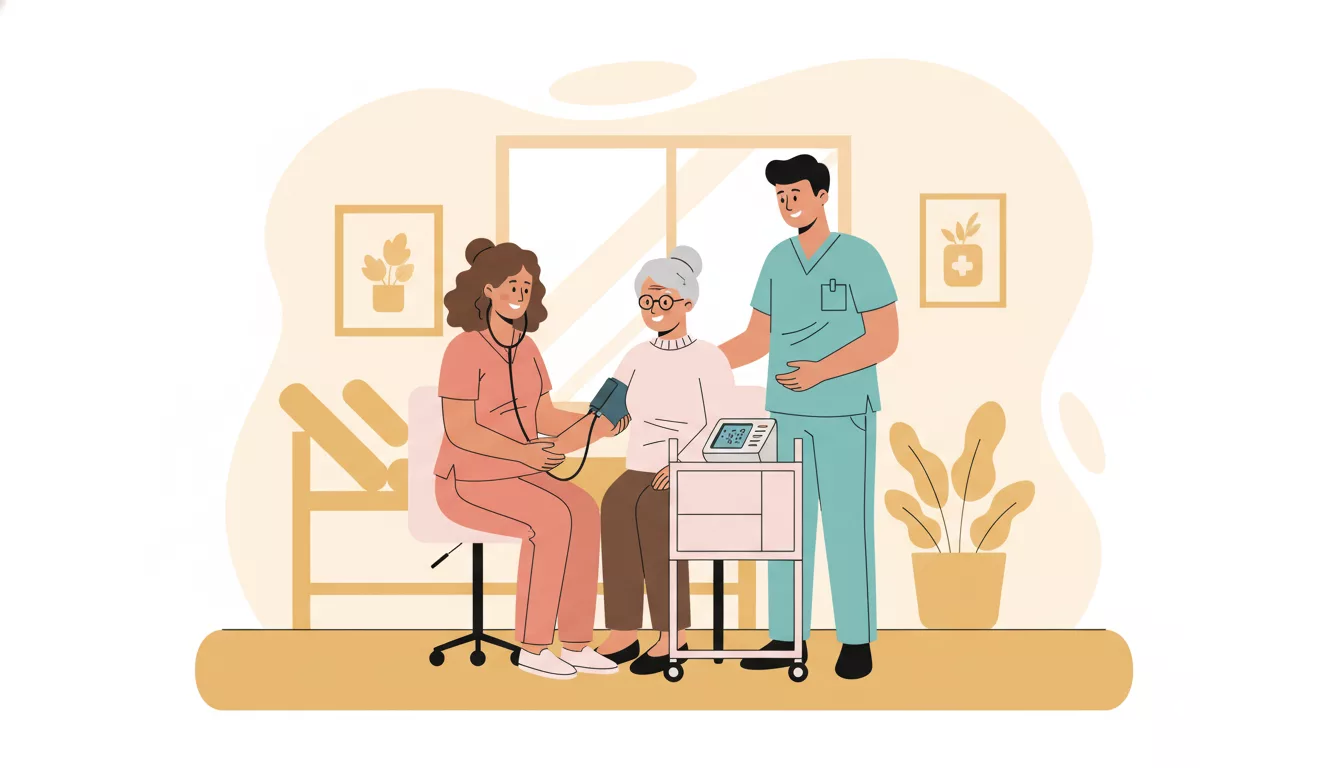
Morning vitals are the first major task of the day. Blood pressure, pulse, temperature, respiratory rate, oxygen saturation, and sometimes blood glucose. You're doing this for every patient on your assignment, and you're doing it before breakfast trays arrive because the nurses need those numbers to make medication decisions.
A good CNA can take a full set of vitals in about 3-4 minutes per patient if everything cooperates. But things rarely cooperate perfectly. Mrs. Henderson's blood pressure cuff keeps erroring because she's moving her arm. Mr. Johnson wants to talk about his grandchildren while you're trying to get an accurate respiratory count. The patient in 207 is in the bathroom and you'll need to come back.
The vitals themselves tell a story if you know how to read them. When you see a blood pressure that's 40 points higher than yesterday, or an oxygen saturation that dropped from 96% to 89% overnight, you don't just chart it and move on. You tell the nurse immediately. CNAs aren't diagnosing anything, but recognizing that something has changed is one of the most valuable skills in the role. You see these patients every day, sometimes for weeks. You notice changes that a doctor seeing them for ten minutes might miss. (Wondering what the paycheck looks like for this kind of responsibility? Check our CNA and medical assistant salary guide for realistic numbers.)
8:00 AM: ADLs - The Work Nobody Talks About
ADLs - Activities of Daily Living - are the core of CNA work, and they're the part that surprises most people who are new to the field. This means helping patients with bathing, dressing, toileting, eating, and moving around. It's intimate, physical work that requires both strength and sensitivity.
Your first assist of the morning is helping a 78-year-old stroke patient get washed up and dressed. She has left-sided weakness and can't manage buttons or zippers independently. You set up the basin, lay out her clothes, and help her wash - letting her do everything she can on her own while you assist with the parts she can't reach. This isn't about doing things for patients. It's about helping them maintain as much independence as possible.
The physical demands are real. Repositioning patients who can't move themselves, transferring someone from bed to wheelchair, supporting a patient's full weight while they take their first steps after surgery - this is why CNAs have one of the highest injury rates in healthcare. Using proper body mechanics isn't optional. Lifting with your legs, using gait belts, asking for help with heavy patients - these habits save your back over a career that could span decades.
There's an emotional component too. Helping someone with personal care who used to be fully independent requires tact. Many patients feel embarrassed or frustrated. The best CNAs learn to make these moments feel as normal and dignified as possible. Small talk helps. Humor helps. Giving the patient control where you can - "Would you like to wear the blue shirt or the green one?" - helps more than most people realize.
9:30 AM: Breakfast and Feeding Assistance
Breakfast trays arrive and your job shifts to making sure every patient on your assignment gets fed. Some patients eat independently. Others need their tray set up - lids removed, containers opened, utensils positioned within reach. A few patients need full feeding assistance, which means sitting beside them and helping them eat one bite at a time.
Feeding a patient is one of those tasks that looks simple until you actually do it. You're watching for signs of difficulty swallowing, making sure they're sitting upright enough to eat safely, pacing the meal so they don't choke, and documenting how much they ate. A patient on a modified diet - pureed foods, thickened liquids - requires extra attention because giving them the wrong consistency is a choking and aspiration risk.
You're also tracking intake. The nurse needs to know if Mrs. Henderson only ate 25% of her breakfast, because that's a data point for her care plan. If a patient consistently refuses meals, that gets reported because it could indicate depression, medication side effects, pain, or a dozen other things that need clinical attention.
10:15 AM: The Medical Assistant Side - Clinic Duties
If you work as a medical assistant in an outpatient clinic rather than a CNA in a hospital or nursing facility, your morning looks different. Instead of ADLs and patient rounds, you're rooming patients for the provider. That means calling the patient from the waiting room, walking them back, taking their vitals, updating their medication list, confirming the reason for their visit, and documenting everything in the electronic health record before the doctor or nurse practitioner walks in.
The rooming process is deceptively complex. You're doing a mini-interview with each patient. "Are you still taking lisinopril 10mg? Any new medications? Any allergies we should add? When was your last tetanus shot?" The accuracy of this information matters because the provider is making clinical decisions based on what you documented. Getting a medication wrong or missing an allergy can have serious consequences.
Between patients, you're handling phone calls, processing prescription refill requests, scheduling follow-up appointments, preparing injection trays, running EKGs, drawing blood if you're phlebotomy-certified, and restocking exam rooms. The pace in a busy clinic is relentless - a provider seeing 20-25 patients per day means you're rooming a new patient every 15-20 minutes with all the documentation and prep work in between.
11:30 AM: Charting Catch-Up
Documentation is the part of healthcare work that nobody enters the field excited about, but it's non-negotiable. Everything you do gets charted - every set of vitals, every assist, every intake and output measurement, every time you reposition a patient, every time they refuse care. If it isn't documented, it didn't happen. That's not just a saying - it's a legal reality.
Most facilities use electronic health records now, so you're doing this on a computer or a mobile workstation you wheel between rooms. The charting systems vary - Epic, Cerner, PointClickCare, athenahealth - but they all require the same basic competency: accurate, timely documentation of everything you observed and everything you did.
Experienced CNAs and MAs develop a charting rhythm. Some chart as they go, ducking into the hallway to document after each patient interaction. Others batch their charting, doing a big catch-up session when they have a few minutes. The risk with batching is forgetting details. A blood pressure you took at 8:15 might get recorded from memory at 11:30, and if you transposed two numbers, that's a problem. Real-time charting is harder to maintain in a busy shift but produces more accurate records.
12:00 PM: Lunch - 30 Minutes If You're Lucky
Lunch is technically 30 minutes. In practice, it's often 20 minutes because you spent the first 10 finishing a task you couldn't leave mid-way. You eat in the break room, which smells like a combination of microwaved leftovers and hand sanitizer. The conversation is about patient loads, weekend plans, and whatever policy change management just announced.
Some days you don't get a real lunch at all. A patient falls, an admission comes in, someone's call light has been going off for five minutes and nobody else is available. You eat a granola bar standing at the nurses' station and call it lunch. This isn't how it's supposed to work - labor laws exist - but the reality of healthcare staffing means it happens more often than it should. The good facilities make an effort to protect break times. The not-so-good ones treat breaks as suggestions.
12:45 PM: Afternoon Rounds and Repositioning
After lunch, you do another set of rounds. Patients who can't reposition themselves need to be turned every two hours to prevent pressure ulcers. This is documented down to the clock - turned to left side at 12:45, turned to right side at 2:45, turned to back at 4:45. A pressure ulcer that develops in a healthcare facility is a serious quality issue, and prevention is a core CNA responsibility.
You're also answering call lights continuously throughout the afternoon. A call light might be someone who needs the bathroom, someone in pain who needs you to find their nurse, someone who spilled their water, or someone who just wants to know when the doctor is coming. You don't know what it is until you walk in, so every call light gets answered with the same urgency.
The afternoon pace varies by setting. In a hospital, admissions and discharges ramp up in the afternoon - new patients arrive, post-surgical patients come back from recovery, and patients going home need help getting dressed and packed. In a long-term care facility, the afternoon is usually steadier, with activities, therapy sessions, and afternoon snacks breaking up the routine.
2:00 PM: The Moment That Reminds You Why You Do This
Between the physical labor and the constant multitasking, there are moments that cut through the noise. Today, the patient in 206 - a 82-year-old man recovering from hip replacement surgery - takes his first independent steps with a walker. He's been anxious about it for days, convinced he'd never walk normally again. Physical therapy has been working with him, but you're the one who helped him sit up, put on his non-slip socks, and encouraged him when he said he couldn't do it.
When he makes it to the doorway and back without assistance, he looks at you and says, "I couldn't have done that without you." And he's right - not because you have some special medical skill, but because you've been there every morning helping him get out of bed, building his confidence one small step at a time. That relationship matters. Nurses and doctors are essential, but CNAs and medical assistants are often the healthcare workers patients form the strongest bonds with because you're there the most.
These moments don't make the news. They don't get documented in medical journals. But they're the reason most people in this field stay despite the staffing shortages, the sore backs, and the emotional weight of working with sick and vulnerable people every day.
3:30 PM: Afternoon Vitals and End-of-Shift Prep
Another round of vitals before shift change. You're watching for changes from the morning numbers. If someone's blood pressure normalized after their morning medication, that's good data for the nurse. If someone's temperature is creeping up, that might mean an infection is developing.
You're also tidying patient rooms, restocking supplies, making sure fresh water pitchers are at every bedside, and catching up on any charting that fell behind during the afternoon rush. The goal is to hand off a clean, organized assignment to the next shift. You know how it feels to walk into chaos during shift report, and you don't want to be the person who causes that.
4:30 PM: Emotional Weight and Decompression
Not every day has a happy ending. Some days, a patient you've been caring for declines rapidly. Some days, you provide post-mortem care - cleaning and preparing a patient's body after they've passed. Some days, a patient with dementia hits you or screams at you because they're scared and confused, and you have to absorb it without reacting because you understand it's the disease, not the person.
The emotional toll of this work is significant, and it's something that training programs mention but can't really prepare you for. You develop coping mechanisms over time. Some people process by talking to coworkers who understand. Some exercise. Some draw firm boundaries between work life and home life. The ones who burn out fastest are usually the ones who try to carry it all alone without acknowledging how heavy it gets.
Facilities are getting better about offering mental health resources and debriefing after difficult events, but the stigma of "toughness" in healthcare still makes some people reluctant to use them. The reality is that feeling things deeply is what makes you good at this job. The key is learning to feel it without letting it consume you.
5:00 PM: Shift Report and Going Home
You give shift report to the evening CNA the same way you received it that morning. Every patient, every detail that matters - who's a fall risk, who refused their afternoon medications, who had a family visit that seemed to upset them, who's scheduled for a procedure tomorrow and needs to be NPO after midnight. A thorough report sets the next person up for success. A lazy one sets them up for failure.
After report, you clock out and walk to your car. The transition from healthcare worker to civilian takes a few minutes. You sit in the parking lot for a moment, decompress, maybe scroll through your phone for five minutes before driving home. Some days you feel proud of the work you did. Some days you feel defeated by the system. Most days, it's a little of both.
What Nobody Tells You About Being a CNA or Medical Assistant
The job is physically harder than people expect. This isn't a desk job. You're on your feet for 8-12 hours, lifting and repositioning patients, walking miles of hospital corridors. Most new CNAs are shocked by how sore they are after their first week. Good shoes aren't a luxury - they're a career investment. Compression socks help. So does core strength training outside of work.
You will see things that change you. Working closely with sick, elderly, and dying patients exposes you to aspects of human life that most people avoid thinking about. This isn't necessarily negative - many CNAs say the work gives them a deeper appreciation for life and health - but it's intense. If you're considering this career, be honest with yourself about your emotional capacity.
Staffing shortages are real and ongoing. The Bureau of Labor Statistics projects CNA and medical assistant demand growing faster than average through 2032. That's good for job security, but it also means you'll frequently work short-staffed, which increases your workload and stress. Learning to advocate for safe staffing ratios is a skill you'll need.
The pay is improving but still doesn't match the work. CNA wages have increased significantly since 2020, with many facilities offering $18-22/hour and sign-on bonuses. Medical assistants typically earn $17-21/hour depending on certification and specialty. But compared to the physical demands, emotional weight, and level of responsibility, most healthcare workers in these roles feel underpaid. Many use the position as a stepping stone toward nursing, PA, or other advanced roles. (See our detailed salary breakdown for current numbers by state and setting.)
Certification matters. CNAs need state certification, which requires completing an approved training program (typically 4-12 weeks) and passing a competency exam. Medical assistants can work without certification in many states, but earning the CMA (AAMA) or RMA (AMT) credential significantly increases your earning potential and job options. Most employers prefer certified candidates.
The career ladder is real. Many registered nurses started as CNAs. The patient care experience you gain is invaluable in nursing school and gives you a clinical foundation that straight-from-college nursing students don't have. Medical assistants can advance to lead MA, office manager, or use the experience as a foundation for PA school, nursing, health information management, or other healthcare careers.
Is This Career Right for You?
This work fits people who are naturally compassionate, physically resilient, and comfortable with the unglamorous realities of human bodies. You need patience - not the polite kind, but the genuine kind that lets you help someone eat breakfast for the twentieth consecutive morning without rushing them. You need thick skin for the days when patients or families direct their frustration at you. And you need the humility to do essential work that often goes unrecognized.
The entry barrier is low compared to most healthcare careers, which is both an advantage and a trap. It's an advantage because you can be working in patient care within a few months of starting training. It's a trap if you enter the field without understanding what you're signing up for. Shadow a working CNA or MA before committing to training. Spend a day watching the actual work, not just reading about it. The people who last in this career are the ones who went in with realistic expectations.
Ready to start your path? Read our complete guide to becoming a CNA or medical assistant, prepare with real interview questions from nursing directors, or explore current openings on our job search.