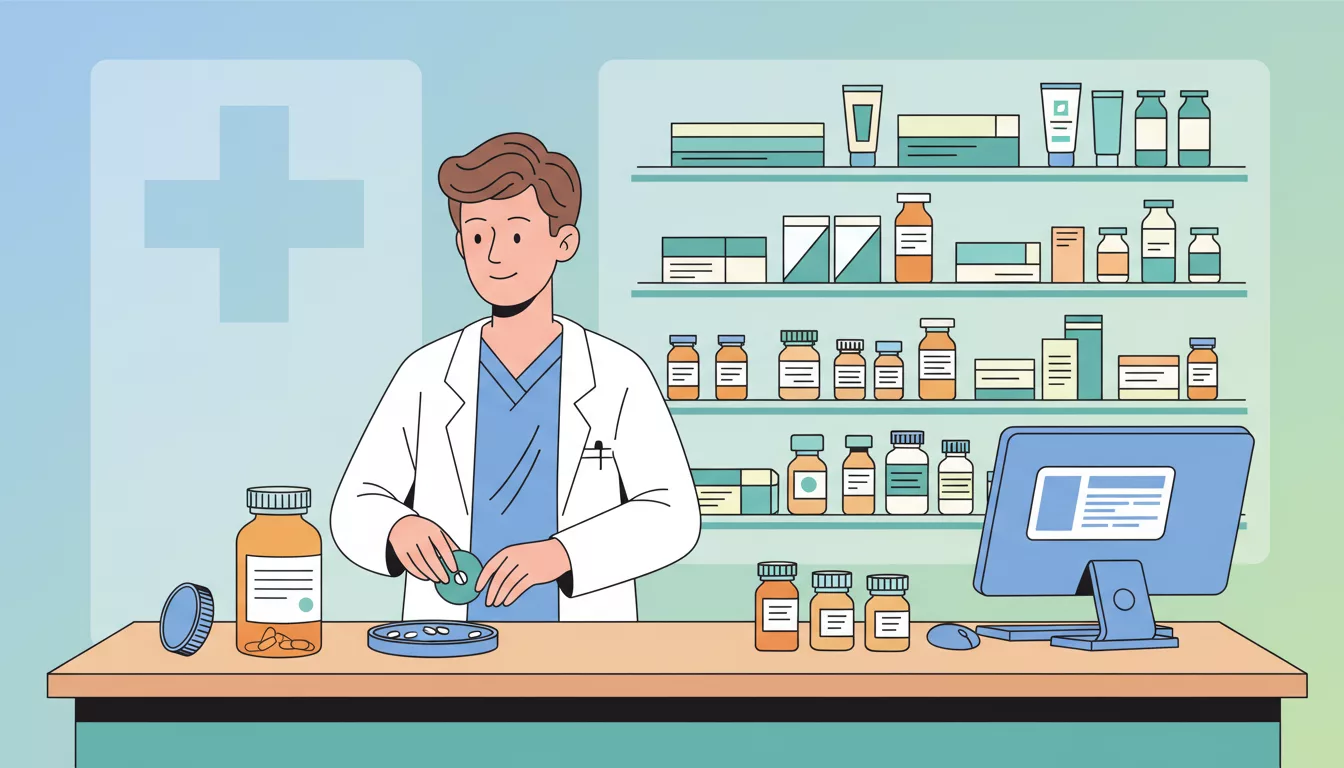
An Honest Look at the Pharmacy Technician Career Path
Pharmacy technician is one of those healthcare careers people suggest when you're interested in medicine but not ready for nursing school or a decade of pre-med. And there's truth to that positioning. Pharmacy technicians earn $28,000 to $48,000 on average, with experienced hospital techs reaching $50,000-$55,000. The barrier to entry is low - you can start in some states with just a high school diploma and on-the-job training.
But let's be clear about what this career actually entails. You'll spend most of your day on your feet behind a counter or in a hospital pharmacy. In retail settings, you're the buffer between frustrated customers, insurance companies that deny claims, and pharmacists who are buried under verification duties. You'll count pills, process insurance rejections, answer phones while people wait impatiently, and explain for the tenth time today why their copay went from $10 to $300. Hospital pharmacy is calmer but more technical - you're preparing IV medications, managing medication carts for entire hospital floors, and working with dosing calculations where errors have serious consequences.
The job market is complicated. The Bureau of Labor Statistics projects essentially flat growth (4% through 2032), which is below average. Automation is real - robotic dispensing systems are handling more of the pill-counting work that once took up most of a tech's day. Pharmacy benefit managers have squeezed retail pharmacy margins so hard that many chains run skeleton crews. And yet, there are still plenty of openings because turnover is high and not everyone wants to deal with the stress level.
What Pharmacy Technicians Actually Do
The day-to-day work varies dramatically depending on where you work. Retail pharmacy techs and hospital pharmacy techs might as well be different jobs.
Retail Pharmacy (CVS, Walgreens, Independent Pharmacies)
This is where most pharmacy techs start. You're the front line - taking prescription drop-offs, entering data into the computer system, running insurance claims, calling doctors' offices for refill authorizations, counting tablets, labeling bottles, and managing the pickup queue. You answer questions you legally can't answer ("Will this make me drowsy?" - that's a pharmacist question) and redirect angry customers who want to argue about their copay.
Modern retail pharmacy involves constant interaction with insurance rejection codes. Prior authorization required. Quantity limits exceeded. Non-preferred drug. You learn the codes, you learn which ones you can work around, and you learn how to explain to someone that their insurance won't cover a 90-day supply until day 75 of their current prescription. Customer service skills matter enormously in retail. So does stress tolerance.
The pace is relentless during busy hours. Twenty people in line, phones ringing, pharmacist asking you to call a doctor, someone at the drive-through window, and you're trying to find why the system shows a drug interaction alert. Staffing is often tight because corporate targets keep labor costs minimal. Many retail techs report feeling constantly behind.
Hospital Pharmacy
Hospital pharmacy techs work behind the scenes preparing medications for inpatients. You're filling medication orders from doctors, preparing IV admixtures in a sterile compounding hood, managing automated dispensing cabinets (Pyxis or Omnicell systems) throughout the hospital, delivering medications to nursing units, and maintaining inventory.
The work is more technical and precise. You're using aseptic technique to prepare sterile IV solutions - chemotherapy, antibiotics, nutrition solutions. You're calculating doses based on patient weight or body surface area. The stakes are higher because you're often working with critically ill patients, but the environment is calmer. No customers yelling at you. No insurance rejections. Just the pharmacy team focused on getting the right medication to the right patient.
Hospital positions typically require national certification (PTCB or ExCPT) from day one. They pay better than retail - $18-$22/hour starting versus $15-$18/hour in retail. But they're also harder to get. Most hospitals want at least one year of experience and prefer techs with sterile compounding training.
Mail Order Pharmacy
Large mail-order operations (Express Scripts, CVS Caremark, OptumRx) process prescriptions in warehouse-like facilities. The work is more repetitive and production-focused. You might spend your entire shift on one task - verifying patient information, operating robotic dispensing systems, packaging medications, or quality-checking orders before they ship.
The environment is more predictable. No customers yelling at you face-to-face. Consistent hours. The downside is the monotony and the production quotas. You're measured on how many prescriptions you process per hour. Some people prefer this structure. Others find it soul-crushing.
Compounding Pharmacy
Specialty compounding pharmacies create custom medications - flavored pediatric formulations, hormone replacement creams, veterinary preparations, or discontinued medications that need to be made from scratch. This work requires specific training in compounding techniques, measurements, and quality control.
Compounding is one of the more interesting areas of pharmacy tech work. You're actually making medications rather than just counting them. The pace is slower, the work is more varied, and there's more problem-solving involved. Pay is typically similar to hospital pharmacy. Jobs are less common because compounding pharmacies are relatively rare.
Specialty Pharmacy
Specialty pharmacies handle high-cost, complex medications - biologics, chemotherapy, HIV medications, multiple sclerosis drugs. Techs in this setting coordinate insurance authorizations (which can take weeks for these expensive medications), manage medication shipments to patients' homes, and provide patient education about medication storage and administration.
This is one of the better-paying segments of pharmacy tech work ($19-$24/hour) because the medications are complex and the insurance coordination is intense. You need strong organizational skills and exceptional attention to detail. One mistake with a $15,000 medication has serious consequences.
Education and Training Requirements
Pharmacy tech requirements vary wildly by state. Some states let you start working with just a high school diploma. Others require formal education and certification before you can touch a prescription bottle.
Minimum Requirements (Most States)
- High school diploma or GED - Universal requirement
- Clean background check - Felonies and drug-related convictions will disqualify you in most states
- Age 18+ - Required by most state pharmacy boards
- Basic math skills - You'll do dosage calculations, measure liquids, and count accurately. Pharmacy math involves ratios, proportions, and metric conversions
- Drug test - Standard across healthcare
Formal Training Programs
Pharmacy technician programs range from a few months to two years. Here's what each option looks like:
Certificate programs (6-12 months, $1,200-$5,000). Community colleges, vocational schools, and some training centers offer short certificate programs. These cover pharmacy law, drug classifications, dosage calculations, compounding basics, and pharmacy operations. Most include an externship where you work in a real pharmacy for 120-240 hours. This is the most common path for people serious about the career.
Programs cover the Pharmacy Technician Certification Board (PTCB) exam content, which helps you pass on the first try. Typical curriculum includes:
- Pharmacology and drug classifications (brand/generic names, therapeutic categories)
- Pharmacy law and ethics (HIPAA, controlled substance regulations, scope of practice)
- Pharmacy calculations (dilutions, concentrations, dosing, IV flow rates)
- Sterile and non-sterile compounding techniques
- Medication safety and error prevention
- Pharmacy information systems
Associate degree programs (2 years, $5,000-$15,000). Some community colleges offer associate degrees in pharmacy technology. These include general education requirements (English, math, sciences) plus the pharmacy tech curriculum. The degree doesn't significantly improve your job prospects or starting pay compared to a certificate, but it gives you college credits if you eventually want to pursue a bachelor's degree (for instance, if you're considering the path to becoming a pharmacist).
On-the-job training (0-6 months, free). In states that allow it, you can be hired as a "pharmacy technician trainee" and learn everything on the job. Large chains like CVS and Walgreens have structured training programs that take you through the basics over several weeks. You're earning while you learn ($14-$17/hour typically), but you're limited in what you can do until you complete training and pass certification exams. This path works if you need income immediately and can't afford to spend months in school.
Which Path Makes Sense?
If you can afford 6-12 months of school, a certificate program is the better choice. You'll learn proper technique from the start, you'll be better prepared for certification exams, and you'll be more competitive for hospital jobs. Programs at community colleges are generally affordable and have good reputations with local employers.
If you need to earn immediately or want to test whether you actually like pharmacy work before investing in training, on-the-job training makes sense. Just know that you'll need to pursue certification within a certain timeframe (varies by state), and you'll be limited to retail positions initially. Similar to becoming a CNA or medical assistant, pharmacy tech is one of those healthcare careers where you can start earning relatively quickly while you build your credentials.
Certification and Licensing
This is where it gets confusing because every state does it differently. Some states require national certification. Some require state-specific registration. Some require both. Some require neither but most employers prefer it anyway.
PTCB Certification (Pharmacy Technician Certification Board)
The PTCB offers the Certified Pharmacy Technician (CPhT) credential. This is the most widely recognized national certification. To be eligible, you need a high school diploma and must complete a PTCB-recognized education/training program or have equivalent work experience.
The PTCB exam (PTCE) is 90 questions taken over 2 hours. It covers four main areas:
- Medications (40% of exam) - Generic/brand names, classifications, dosage forms, routes of administration, common side effects
- Federal Requirements (12.5%) - DEA regulations for controlled substances, FDA recalls, HIPAA, prescription requirements
- Patient Safety and Quality Assurance (26.25%) - Error prevention, medication safety, infection control, quality improvement
- Order Entry and Processing (21.25%) - Intake, interpretation, calculation, preparation, dispensing procedures
The exam costs $129. Pass rate is around 72% nationally for first-time test takers, which is higher than you might expect. People who complete formal training programs pass at higher rates (80-85%) than those who rely solely on work experience. Once certified, you need 20 hours of continuing education every two years to maintain the credential. Renewal costs $40 biennially.
PTCB also offers advanced certifications for specialized roles - Certified Compounded Sterile Preparation Technician (CSPT), Certified Medication History Technician, and others. These can boost your earning potential by $1-3/hour.
ExCPT Certification (National Healthcareer Association)
The ExCPT (Exam for the Certification of Pharmacy Technicians) is the alternative to PTCB. It's 100 questions over 2 hours covering similar content. The exam costs $115. Some employers accept ExCPT, but PTCB is more widely recognized, especially in hospital settings. Pass rates are comparable to PTCB.
State Registration and Licensing
Many states require pharmacy techs to register with the state board of pharmacy, which is separate from national certification. Registration usually involves an application fee ($25-$100), background check, and sometimes a state-specific exam or jurisprudence exam covering that state's pharmacy laws.
States with the strictest requirements (California, Louisiana, Texas, Oregon) require both national certification and state registration and sometimes completion of a board-approved training program. States with minimal requirements (like Colorado and Montana) don't require certification at all, though most employers still prefer it.
Check your specific state board of pharmacy website before you start training. The requirements matter, especially if you might move to a different state later. Some states have reciprocity agreements, others don't.
How Long the Path Takes
The timeline depends entirely on which route you take and whether you're studying full-time or working simultaneously.
| Path | Duration | Total Cost | When You Start Earning |
|---|---|---|---|
| On-the-job training + certification | 6-12 months | $129-$500 (exam and study materials) | Immediately (trainee wage) |
| Certificate program + certification | 9-12 months | $1,500-$5,500 total | After externship (months 8-10) |
| Associate degree + certification | 18-24 months | $5,000-$15,000 total | After externship (months 15-18) |
Fast track (4-6 months). If you're hired into an on-the-job training program, work 30-40 hours per week while studying PTCB material independently, you can take and pass the certification exam within 4-6 months. This is the fastest path from zero to certified pharmacy technician. Many people working in retail use this approach.
Standard track (9-12 months). Complete a community college certificate program (typically one semester of coursework plus one semester including externship), then sit for the PTCB exam. Most programs are designed so you finish ready to test. This is the most common timeline for career changers who aren't desperate for immediate income.
Part-time track (12-24 months). If you're working another job and taking classes part-time, expect the timeline to stretch. Many community colleges offer evening and weekend pharmacy tech programs specifically for working adults. The content is identical, just spread over more months.
Salary and Job Market
Money is one reason people enter pharmacy tech work, but it's important to have realistic expectations. This is not a high-paying career compared to other healthcare options. For context, registered nurses earn $65,000-$95,000, and even dental hygienists average $70,000-$85,000. Pharmacy techs earn considerably less.
Starting Salaries by Setting
- Retail pharmacy - $15-$18/hour starting ($31,000-$37,000 annually). National chains (CVS, Walgreens, Walmart) pay toward the lower end. Independent pharmacies sometimes pay slightly better but have fewer positions available.
- Hospital pharmacy - $18-$22/hour starting ($37,000-$46,000 annually). Requires certification typically. Larger hospital systems and union hospitals pay better.
- Mail order/warehouse pharmacy - $16-$20/hour starting ($33,000-$42,000 annually). Shift differentials for nights and weekends can add $1-2/hour.
- Specialty pharmacy - $19-$24/hour starting ($40,000-$50,000 annually). Best pay in the field but requires more experience usually.
- Compounding pharmacy - $17-$21/hour starting ($35,000-$44,000 annually). Requires specialized compounding training.
Experienced Pharmacy Tech Salaries
After 3-5 years of experience, wages increase but not dramatically. Experienced retail pharmacy techs typically max out at $18-$22/hour ($37,000-$46,000). Hospital techs with 5+ years and specialized certifications can reach $22-$26/hour ($46,000-$54,000). Lead pharmacy techs in hospital settings occasionally break $55,000-$60,000.
The hard truth is that pharmacy tech has a relatively low salary ceiling. You're not reaching $70,000+ in this role unless you're in a specialized position in an expensive metro area or you move into management. This is a stable, entry-level healthcare job, not a high-earning career path.
Geographic Pay Differences
Location matters significantly. Top-paying states include:
- California - Average $48,000+, with Bay Area and LA techs earning $50,000-$56,000
- Alaska - Average $46,000+, driven by cost of living and workforce shortages
- Washington - Average $45,000+, especially Seattle metro
- Oregon - Average $43,000+
- Massachusetts - Average $42,000+
Lowest-paying states (Alabama, Mississippi, West Virginia, South Carolina) average $28,000-$32,000. Cost of living differences explain some but not all of the gap.
Job Market Reality
The pharmacy tech job market is paradoxical. There are always openings, but that's largely because turnover is high. Retail pharmacy burnout is real. Many techs leave within 2-3 years because the stress, pay, and working conditions don't justify staying.
Automation is changing the field. Robotic dispensing systems (ScriptPro, Parata, etc.) now handle much of the counting and packaging work. This reduces the number of techs needed per pharmacy, but it also shifts the role toward more customer service, insurance problem-solving, and technical tasks that robots can't do. The techs who survive are the ones who can handle difficult customers, navigate complex insurance issues, and troubleshoot problems.
Hospital pharmacy jobs are more stable and generally preferred, but they're harder to get. Most hospital positions require certification from day one and prefer candidates with retail experience or specialized training. Competition for hospital positions is higher because the working conditions are better.
Career Advancement
Pharmacy tech isn't a dead-end job, but the advancement options are limited compared to other healthcare careers.
Senior/Lead Pharmacy Technician
After several years of experience, you can move into a senior or lead tech role. You're training new techs, managing inventory, handling complex insurance issues, and coordinating workflow. Pay increase is modest - typically $1-3/hour above base tech wage. Many lead techs in hospital settings earn $48,000-$56,000.
Pharmacy Buyer/Inventory Specialist
Managing pharmaceutical inventory, negotiating with wholesalers, tracking medication usage, and ensuring proper stock levels. This role exists primarily in hospital systems and larger pharmacies. Pay is $45,000-$60,000. Requires strong organizational skills and several years of pharmacy experience.
Pharmacy Technician Instructor
Teaching in pharmacy tech programs at community colleges or vocational schools. Requires significant experience (usually 5+ years), national certification, and often a bachelor's degree. Pay is $40,000-$58,000 depending on the institution. More predictable hours than clinical pharmacy work.
Specialized Certifications
PTCB offers several advanced certifications that can boost your pay and marketability:
- Certified Compounded Sterile Preparation Technician (CSPT) - Prepares you for sterile IV compounding in hospital settings. Can add $1-3/hour to your base pay.
- Certified Medication History Technician - Specialized role in hospitals conducting patient medication interviews. Relatively new credential with limited adoption so far.
- Advanced Certified Pharmacy Technician (CPhT-Adv) - Requires 5+ years of experience and additional training. Recognition varies by employer.
Path to Pharmacist
Some pharmacy techs use the role as a stepping stone to pharmacy school. Working as a tech gives you direct exposure to pharmacy practice, which strengthens your application. You'll need to complete a bachelor's degree (any major, but chemistry or biology are common), take the PCAT exam, and then complete a 4-year Doctor of Pharmacy (PharmD) program. Total timeline from pharmacy tech to pharmacist is 8-9 years. Pharmacists earn $120,000-$140,000, but they also carry $150,000+ in student debt on average and face their own job market challenges as retail pharmacy chains cut pharmacist hours.
Where to Find Pharmacy Tech Jobs
Pharmacy tech positions are widely available, but where you look matters depending on what type of position you want.
Major Employers
Retail chains. CVS, Walgreens, Walmart, Rite Aid, Kroger, Safeway/Albertsons all hire pharmacy techs constantly. These are the easiest positions to land, especially for new techs. Apply directly through their career portals. Expect 2-3 rounds of interviews (hiring manager, store manager, sometimes district pharmacy supervisor). They hire based on customer service skills and availability as much as pharmacy knowledge.
Hospital systems. Major hospital networks (HCA, Tenet, CommonSpirit, regional systems) post positions on their career sites. Hospital jobs are harder to get. They want certified techs with some experience. If you're transitioning from retail to hospital, highlight any experience with IV medications, compounding, or inventory management. Prepare for pharmacy technician interview questions that focus on medication safety, teamwork, and attention to detail.
Mail order operations. Express Scripts, CVS Caremark, OptumRx, Humana Pharmacy, and others operate large fulfillment centers. These jobs are more production-focused. They hire in waves when they open new facilities or expand operations. Pay is competitive, hours are regular, but the work is repetitive.
Specialty pharmacies. Look for smaller specialty pharmacy companies that focus on specific therapeutic areas - oncology, HIV, multiple sclerosis, transplant medications. These positions are less common but more interesting and better-paying.
Independent pharmacies. Family-owned pharmacies sometimes offer better working conditions than chains - more autonomy, closer relationships with regular customers, less corporate pressure. But there are fewer of these pharmacies every year, and they rarely advertise openings publicly. You need to walk in and ask.
Job Search Strategy
Retail positions are easy to find - just visit pharmacy career pages and apply. For hospital positions, you need a more targeted approach. Network with pharmacists and techs you meet during your training. Hospital pharmacy departments are small, and word-of-mouth recommendations matter. If you complete an externship at a hospital, make a strong impression - many hospitals hire their externs.
Highlight certifications and specialized training on your resume. If you completed a sterile compounding course, call that out. If you're bilingual, mention it - Spanish-speaking pharmacy techs are in high demand in many markets. Customer service experience from non-pharmacy jobs is relevant for retail positions.
Is This Career Right for You?
Pharmacy tech can be a decent entry point into healthcare, but it's not for everyone. Here's the honest assessment of who succeeds and who burns out.
You'll Probably Do Well If You:
- Have strong customer service skills and can stay calm when people are angry or frustrated
- Are extremely detail-oriented - medication errors have serious consequences
- Can multitask effectively - you're constantly juggling phones, customers, computer systems, and pharmacist requests
- Don't need a high income but want stable work in healthcare
- Are good at repetitive tasks without losing focus
- Can handle standing for 8-10 hours with minimal breaks
- Work well under pressure - there's no "slow down and catch up later" in a busy pharmacy
- Are patient with technology - pharmacy systems crash, insurance portals are terrible, and you'll spend a lot of time on hold with insurance companies
You'll Probably Struggle If You:
- Get flustered easily when people are upset - you'll deal with angry customers constantly in retail
- Need variety in your work - much of pharmacy tech work is repetitive
- Have physical limitations - you're on your feet all day, reaching for medications on high shelves, lifting boxes
- Want a career with high earning potential - the salary ceiling is low
- Don't like computer work - most of your day is data entry, insurance processing, and system navigation
- Prefer working independently - you're constantly interacting with pharmacists, customers, and other staff
- Have difficulty with math - dosage calculations and measurements are part of the job
- Want weekends and holidays off - retail pharmacy is open seven days a week, and techs work rotating schedules
The Physical Reality
Pharmacy tech work is less physically demanding than nursing or other clinical roles, but it's not easy. You're standing on hard floors for entire shifts. Most pharmacies don't have seating for techs. Your feet, legs, and back will hurt, especially in the first few weeks. Good shoes aren't optional - invest in quality shoes designed for people who stand all day.
Repetitive strain injuries are common. You're reaching, typing, using the same hand motions hundreds of times per shift. Carpal tunnel syndrome affects many long-term pharmacy techs. Proper ergonomics matter, but pharmacy workstations aren't always designed well.
The mental stress is often harder than the physical demands. Dealing with insurance denials, prior authorization requirements, angry customers, and constant time pressure wears people down. Many retail pharmacy techs describe the job as "chaotic" and "overwhelming" during peak hours. Hospital pharmacy is generally less stressful, but you're dealing with critically ill patients where mistakes have immediate life-threatening consequences.
Compared to Similar Healthcare Careers
If you're considering pharmacy tech but want to compare it to other healthcare options with similar entry requirements, here's the honest comparison.
CNAs and medical assistants have similar training timelines (a few months to a year) and similar starting pay ($28,000-$38,000). Medical assistants generally have better advancement options and more varied daily tasks. CNAs have harder physical work (lifting patients, dealing with bodily fluids) but more direct patient care.
Dental hygienists require more education (associate degree, 2-3 years) but earn significantly more ($70,000-$85,000) with better working conditions. If you can handle the additional schooling, dental hygiene is a stronger career path financially.
Pharmacy tech occupies a middle ground - less patient contact than CNAs or medical assistants, less physical labor, but also lower pay and fewer advancement options. It's a reasonable choice if you want to work in healthcare but prefer working with medications and systems rather than direct patient care.
Ready to Start? Next Steps
Research your state's requirements. Visit your state board of pharmacy website and find out what's required to work as a pharmacy tech in your state. Do you need certification from day one, or can you start as a trainee? Is state registration required? What are the fees?
Explore training options. If your state allows on-the-job training and you need income immediately, apply to retail pharmacy chains as a pharmacy technician trainee. If you can afford 6-12 months of school, research community college pharmacy tech programs in your area. Look for programs accredited by ASHP (American Society of Health-System Pharmacists) or ACPE (Accreditation Council for Pharmacy Education).
Get realistic exposure. Walk into a busy CVS or Walgreens at 5 PM on a weekday and watch the pharmacy for 10 minutes. That's the environment. If it looks manageable, good. If it looks like chaos you'd hate, reconsider. Talk to working pharmacy techs about what the job is really like. Most will be honest if you ask.
Do the math on finances. Can you afford to not work for 6-12 months while you complete training? If not, you'll need to work part-time while attending school or pursue on-the-job training. Figure out the total cost including tuition, certification exam, state registration fees, and living expenses during training.
Start studying if you're taking the certification route. Buy a PTCB exam prep book (Mosby's and Pearson publish good ones) and start learning generic/brand drug names. This is the hardest part of the exam for most people. There are hundreds of commonly prescribed medications to memorize.
Pharmacy technician isn't a glamorous career, and it won't make you rich. But it's accessible, relatively stable, and it gets you into healthcare without years of schooling or massive debt. For people who are detail-oriented, patient with difficult customers, and realistic about the pay and stress level, it can be a decent career path. Just go in with your eyes open about what the job actually entails.
Start searching for pharmacy technician jobs in your area to see what positions are currently available and what employers are hiring.