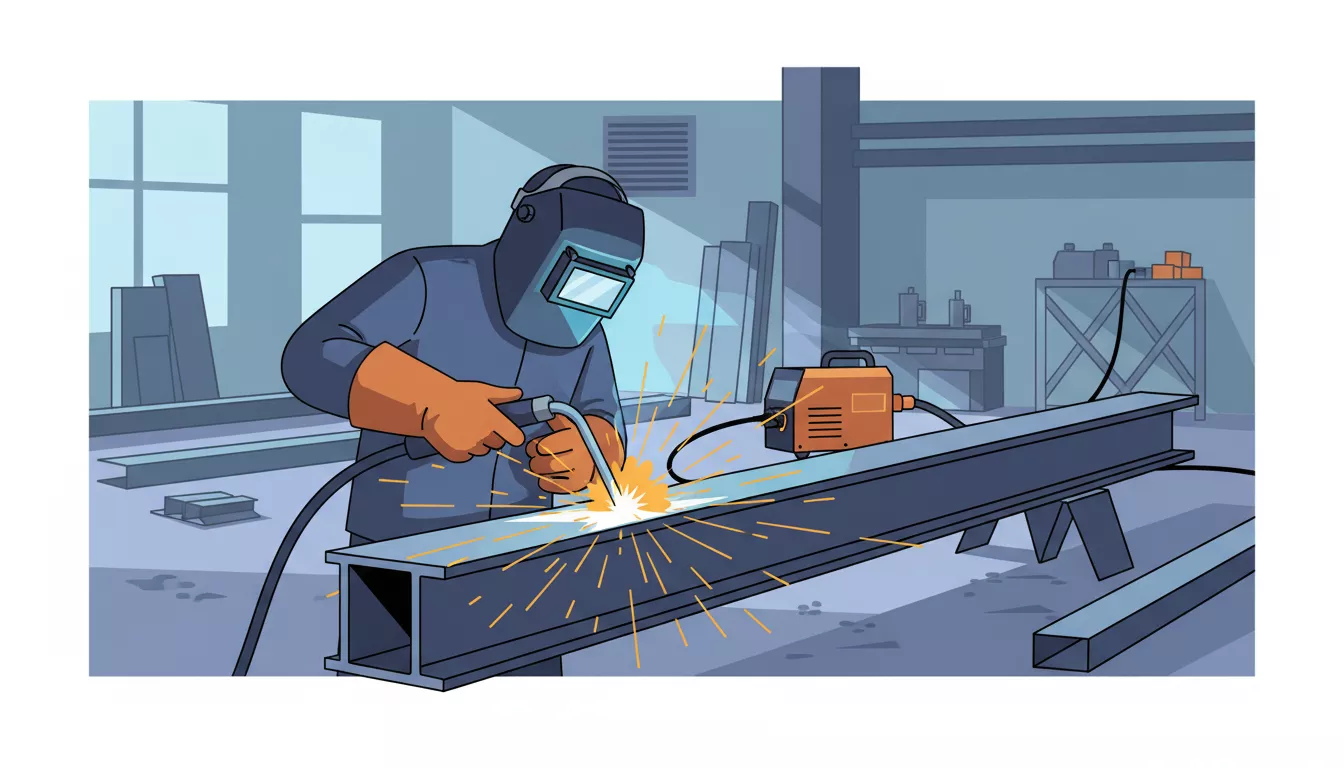
4:45 AM: The Alarm Nobody Envies
Most welders don't start their day at 9 AM with a latte and a laptop. The alarm goes off before 5, and if you're working a shop job or construction site, you're expected to be geared up and ready to strike an arc by 6 or 6:30. (Curious about the money? Check our welder salary guide to see what those early mornings are worth.)
The morning routine is more deliberate than most office jobs. You're pulling on flame-resistant clothing, steel-toed boots, and maybe a long-sleeve cotton shirt under your leathers. Some welders lay out their gear the night before because fumbling around in the dark at 4:50 AM is a recipe for forgetting something critical - like your auto-darkening helmet that you left charging in the garage.
Breakfast is usually something fast. A lot of welders eat in their truck on the way to the site. Coffee is non-negotiable. By 5:30, you're either on the road or already walking into the shop.
6:00 AM: The Jobsite Wake-Up
Whether you work in a fabrication shop, a construction site, a shipyard, or an industrial plant, the first 30 minutes look similar everywhere. You check in with your foreman or lead, get your work order for the day, and review any prints or weld procedure specifications (WPS) for the joints you'll be running.
This is the part that surprises people who think welding is just "melting metal together." Before you ever pull a trigger on a MIG gun or strike a stick electrode, you need to understand:
- Base metal type and thickness - carbon steel, stainless, aluminum, and chromoly all weld differently
- Joint configuration - butt joints, T-joints, lap joints, corner joints, each with specific prep requirements
- Weld position - flat, horizontal, vertical up, vertical down, overhead (overhead welding is exactly as miserable as it sounds)
- Filler metal and shielding gas - the WPS tells you exactly what wire or rod to use and at what settings
- Quality requirements - some welds get X-rayed or ultrasonically tested, and a single porosity pocket can mean grinding it out and starting over
If you're on a construction site, there's also a safety briefing. OSHA takes welding hazards seriously - arc flash burns, fume exposure, fire risks, confined space entry. You sign a Job Safety Analysis form and confirm your fire watch partner knows where the extinguisher is.
6:30 AM - 10:00 AM: The First Burn
This is the productive stretch. The shop is still relatively cool (welding in a Texas fabrication shop in August is a different article entirely), your arms are fresh, and your concentration is sharp. For a shop welder, this block might involve:
Fit-up work. Before welding, someone has to cut, grind, bevel, and tack the pieces into position. On some crews the fitters handle this. On smaller operations, you're doing it yourself. Good fit-up is 70% of a good weld - if the gap is wrong or the bevel angle is off, no amount of skill will save the joint.
Running beads. Once the fit-up is right, you start welding. A skilled welder falls into a rhythm that's hard to describe to anyone who hasn't done it. You're controlling travel speed, arc length, work angle, and travel angle simultaneously while watching the puddle through a lens so dark everything else disappears. Your body position matters - bracing your arms against the workpiece, keeping your breathing steady because even your breath can push the shielding gas around on a TIG weld.
A typical morning might be 15-20 individual welds on a structural fabrication project, or one long multi-pass weld on a pressure vessel that takes three hours of unbroken focus. The variety depends entirely on what kind of welding you do. (Not sure if this career is right for you? Our guide to becoming a welder covers everything from training to certifications.)
Grinding and cleaning. Between passes, you're grinding slag (for stick welding), wire-brushing the bead (for MIG), or using a stainless brush on TIG welds. This is the unglamorous part that takes up more time than actual welding. Some days it feels like you spend more time grinding than welding, and that's probably accurate.
10:00 AM: Break Time (Your Body Needs It)
Welding is physical work that people underestimate. You're holding a 7-pound MIG gun or a 3-pound TIG torch at awkward angles for hours. Your neck hurts from looking up at overhead welds. Your knees ache from kneeling on concrete to run a root pass on a pipe. The heat from the arc and the ambient temperature in the shop compound the fatigue.
Break time is 15 minutes. Most welders use it to hydrate aggressively (dehydration is a real problem), eat a snack, and step outside for fresh air. If you've been welding galvanized steel, you definitely want fresh air - the zinc fumes cause "metal fume fever," which feels like the flu and ruins your weekend.
The break room conversation is predictably unpredictable. Welders talk about trucks, hunting, fishing, side jobs, and which AWS certification is worth getting next. Someone is always complaining about a bad batch of welding wire or how the new guy keeps burning through thin material.
10:15 AM - 12:00 PM: The Grind Continues
Back to it. The mid-morning block often brings different challenges. Maybe the foreman pulls you off your project to handle a repair weld - a cracked bracket on a piece of heavy equipment that needs to be back in service by tomorrow. Repair welding is a different skill than production welding. You're working on dirty, painted, rusty metal that needs to be ground down to bright steel before you can weld. The joint design is whatever the crack gave you. And the expectations are just as high as a new fabrication.
Some days bring inspection. A CWI (Certified Welding Inspector) walks your welds with a flashlight and magnifying glass, checking for undercut, porosity, lack of fusion, and proper weld size. Failing an inspection means grinding out the weld and re-doing it, which can cost you an hour or more depending on the joint. Welders who consistently pass inspection are worth their weight in filler metal - it's one of the first things a welding interview will test you on.
12:00 PM: Lunch
Lunch is 30 minutes in most shops. Some sites give you an hour. Either way, you're eating more than a desk worker because the calorie burn is real. Most welders bring a cooler with a substantial lunch - sandwiches, leftovers, whatever fuels an afternoon of physical work.
The lunchtime social dynamic is its own ecosystem. The shop splits into groups: the guys who eat in the break room and watch whatever's on TV, the guys who eat in their trucks and scroll their phones, and the guys who use lunch to work on side projects (welders who do side jobs or art welding often use lunch to plan pieces).
12:30 PM - 3:00 PM: The Afternoon Push
The afternoon is where discipline separates good welders from average ones. Your body is tired. The shop is at peak temperature. Concentration wavers, and that's exactly when mistakes happen - a wandering arc, poor tie-ins, or forgetting to purge your back gas on a stainless pipe weld.
Experienced welders know to save their easier welds for the afternoon when possible. Flat-position MIG welds are more forgiving when you're tired than overhead stick welds. But the work order doesn't always cooperate with your energy levels.
This is also when the variety of welding careers becomes obvious. A shop welder might be running the same type of weld all afternoon on a production run - 50 identical brackets that need identical fillet welds. A field welder might be dealing with wind blowing their shielding gas away while they're 40 feet up on a structural steel beam. A pipe welder in a refinery might be running a 6G pipe weld in a space so tight they can barely move their arms. Each setting has completely different challenges.
Here's roughly what different welding specialties look like in the afternoon:
| Specialty | Typical Afternoon | Biggest Challenge |
|---|---|---|
| Shop/Production | Running repetitive welds on fixtures | Staying focused on quality during monotony |
| Structural/Field | Welding outdoors in weather, heights | Wind, heat, rain, and physical access |
| Pipe (Refinery/Plant) | Multi-pass welds in tight spaces | Body positioning and back-purge management |
| Underwater | Dive operations with wet/dry welding | Everything (visibility, pressure, current) |
| Aerospace/Nuclear | Precision TIG on exotic alloys | Extreme quality standards and documentation |
3:00 PM: Afternoon Break and Clean-Up Starts
Second break. By now your welding helmet has a salt ring from sweat, your gloves are developing that particular worn-leather smell, and your forearms have a collection of small burns from spatter that found gaps in your sleeves. Welders call these "angel kisses" or "stars" depending on how poetic they're feeling. Every welder has them.
After break, the last stretch is usually wrapping up current work, cleaning your station, and doing end-of-day maintenance. You clean your MIG gun liner, replace contact tips if they're worn, and organize your tools. Good welders take care of their equipment because a clogged gun liner at 7 AM tomorrow means wasted time.
3:30 PM: Paperwork and Tomorrow's Prep
Yes, welders do paperwork. On code work (structural, pressure vessels, piping), you log every weld with the WPS number, filler metal lot number, heat number of the base metal, and your welder ID. This traceability is required by AWS, ASME, and API codes. If something fails in 20 years, they can trace it back to exactly who welded it, with what materials, on what date.
You also update your timesheet, note any material shortages for the shop manager, and flag any issues for tomorrow's crew or the next shift. If you're working in a union shop, the end-of-day routine is more structured - tools down at a specific time, no exceptions.
4:00 PM: The Drive Home
Shift's over. For a typical shop welder working 6:00 to 3:30 or 4:00, that's about a 10-hour day with breaks. Overtime is common - many welders regularly work 50-60 hour weeks, especially on deadline-driven projects. The overtime pay is significant and for many welders represents 20-30% of their annual income.
The drive home is when you feel it. Your shoulders are tight from holding position all day. Your eyes are tired from staring through the lens. There's a particular kind of fatigue that comes from welding all day - it's not the same as running or lifting weights. It's a combination of physical exertion, heat exposure, concentration fatigue, and the toll of wearing heavy PPE for 10 hours.
What Nobody Tells You About the Welding Life
The money can be very good. Shop welders start in the mid-$40s, but specialized welders - pipe, underwater, aerospace - can push well into six figures. Travel welders who chase shutdown work at refineries and power plants can earn $150,000+ per year, though they're living out of hotels for months at a time.
Your body is your tool, and it wears out. Long-term welders deal with joint problems, back issues, and sometimes respiratory problems if they weren't consistent about fume extraction. The smart ones invest in ergonomic positioning, proper ventilation, and taking breaks before they need them.
The learning never stops. New alloys, new processes (laser welding, friction stir welding), new codes and standards. Welders who stay current with certifications and learn new processes stay employable and command higher pay. The ones who refuse to learn anything beyond MIG on mild steel top out early.
It's creative work disguised as trade work. Running a beautiful TIG bead on stainless steel is genuinely artistic. Many professional welders do metal art or custom fabrication on the side - furniture, sculptures, automotive work. The skills transfer perfectly, and the side income can be substantial.
Job security is strong. Robots handle a lot of production welding now, but repair work, field work, pipe welding, and any custom fabrication still requires a human with a hood. The skilled trades shortage means experienced welders with code certifications can essentially pick their employer.
Is Welding Right for You?
Welding is a career for people who like working with their hands, can handle physical demands, and find satisfaction in building things that last. If you hate being at a desk but want to earn a solid middle-class (or better) income without a four-year degree, welding delivers on that promise.
The barriers to entry are lower than most people think. Community college welding programs run 6 months to 2 years. Many employers will hire entry-level welders and train them on the job. AWS certifications can be earned at any testing facility. Within 2-3 years, a motivated welder can be earning $55,000-$65,000 with clear paths to more.
But go in with open eyes. The burns, the heat, the early mornings, the physical toll - these are real tradeoffs, not just minor inconveniences. The welders who last 20+ years in the trade are the ones who respect those realities and take care of themselves accordingly.
Ready to start? Read our complete guide to becoming a welder, brush up with real welding interview questions, or check the latest welder salary data to see what you could earn.